

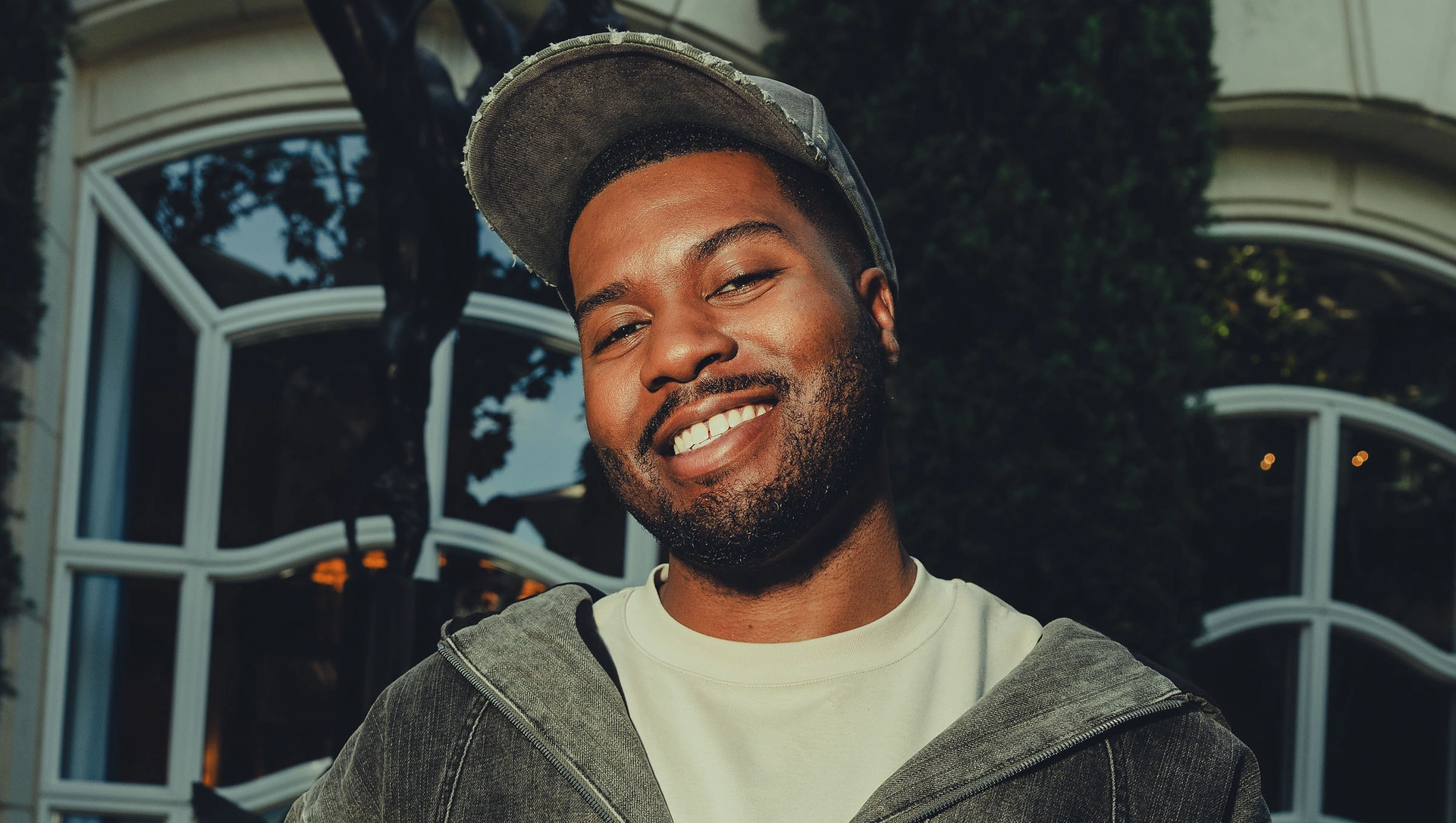
The citation SoundExchange issued Tuesday (Sept 15) calls Khalid one of the most-streamed artists in the organization's 20-plus year history of administering digital performance royalties. Nothing in that sentence has anything to do with Spotify, Apple Music, or any other service where a listener picks a song and presses play.
SoundExchange collects under a statutory license that reaches non-interactive services only, which is why satellite radio, webcasters, and digital cable music channels pay into the pool. On-demand platforms negotiate their licenses directly with record companies and never pay into it at all. More than 3,600 services do pay in, led by Pandora, SiriusXM, and iHeartRadio, and every dollar that arrives is divided by regulation rather than by negotiation.
Khalid's catalog sits squarely in that lane. "Location" and "Young Dumb & Broke" both reached the top 20 of the Billboard Hot 100, and both settled into the sort of mid-tempo rotation that satellite and webcast programmers keep running for years. Michael Huppe, the organization's president and chief executive, said the Grammy-nominated singer "stands out for his unique ability to connect people through universal themes." Khalid called the honor "a testament to years of hard work and the support of my dedicated fans."
What the Award Is Actually Counting
The split behind every one of those plays is fixed in regulation rather than bargained for. Fifty cents of each dollar goes to the owner of the sound recording, and 45 cents goes to the featured artist. The remaining 5 cents goes to the AFM & SAG-AFTRA Intellectual Property Rights Distribution Fund, which pays the session musicians and background vocalists who worked on the record. That 45 percent carries more weight than its size suggests, because it travels to the artist directly instead of landing in a label account where it can be applied against an unrecouped advance.
Confusion about which plays count is understandable, because the industry uses a single word for two different businesses. A subscriber who searches for "Location" and taps it has made an interactive request, and that transaction runs on a license negotiated privately between the platform and the rights holder. Someone who turns on a Pandora station and hears the same song has triggered a non-interactive performance, which falls under the statutory license and gets reported to SoundExchange. That second play is the one that put Khalid in this Hall of Fame.
There is still no performance right for over-the-air broadcast in the United States, so an FM station spinning "Location" pays the songwriter and the publisher and gives the singer nothing. Move that identical spin to the station's online simulcast and SoundExchange begins collecting on it, which is the distinction the American Music Fairness Act was written to erase.
The Number Underneath the Milestone
Every recent SoundExchange announcement leads with the same pair of figures, and the Khalid release is no exception. The organization cites $13 billion collected and distributed to date on behalf of more than 800,000 music creators, plus international partnerships it says now cover 93 percent of the available global market. That milestone was crossed in March 2026, and the release announcing it carried a second number the artist citations leave out.
SoundExchange distributed $991.5 million in 2025, down 5.9 percent from the $1.05 billion it paid out in 2024. The 2024 figure had itself risen 4.9 percent over the year before, so roughly $60 million left the system in twelve months. Huppe presented 2025 as a success, saying that "distributing nearly a billion dollars in 2025 and surpassing $13 billion in lifetime distributions shortly after speaks to SoundExchange's enduring mission to put creators first." Neither that release nor the Khalid announcement offers an explanation for the decline.
Set the drop against the rest of the business and the direction looks stranger still. Recorded music revenue in the United States grew 6.9 percent in the first half of 2026 to $6 billion, with streaming at $4.9 billion and paid subscriptions at $3.4 billion. Our reading of the RIAA mid-year report found that distribution stranding rap and R&B artists on the slowest-growing line in the document. The one stream that pays a featured artist without a label standing in the middle moved backward while nearly everything else moved up.
What makes the figure hard to dismiss is where it comes from. Satellite subscriptions and ad-supported webcasting are mature businesses rather than emerging ones, and the rates governing them are set by federal proceeding rather than by market competition. A soft year in either channel therefore shows up in artist checks, with no growth elsewhere in the pool to absorb it. The registration picture adds a second layer, since the same March release counted nearly 500,000 registered artists and rights owners against the more than 800,000 creators the organization represents.
The Collector That Cannot Sue
Part of the story sits in a federal courthouse in Manhattan. SoundExchange sued SiriusXM in 2024, alleging that the satellite company bundled service tiers with different royalty structures in a way that suppressed the revenue base its payments were calculated against. The complaint put the resulting shortfall at roughly $150 million, and Judge Naomi Reice Buchwald dismissed the case on Aug. 7, 2025 without ever reaching the allegation.
Her ruling turned instead on whether SoundExchange belongs in court at all. Reading the statute, the court held that "Section 114 lacks an explicit provision extending SoundExchange a right of action." It observed that Congress had written explicit enforcement powers into other parts of the Copyright Act, and pointed to audits and arbitration as the remedies actually available. SiriusXM has maintained throughout the dispute that its royalty calculations are "rigorous, tested and fair."
SoundExchange called the ruling "entirely wrong on the law" and filed notice of appeal to the Second Circuit on Sept. 5, 2025. By that point it was describing the cumulative underpayment as more than $400 million rather than $150 million. Its argument on appeal is that litigation authority is necessary "for the statutory license to function properly," a position that concedes how much rests on the answer. An affirmance would leave the entity collecting for 800,000 creators with no mechanism to force a payer into discovery. The 45 percent that reaches artists directly would then depend on the accuracy of revenue figures reported by the companies cutting the checks.
Three Trophies in Five Months
Khalid is the third artist inducted since spring. Kirk Franklin received the award on April 22, 2026, Chance the Rapper followed on Aug. 30, and Khalid arrived on Sept. 15. Each announcement was built on the same template and anchored by the same $13 billion headline. The Hall of Fame dates to 2023, created for the organization's 20th anniversary, and its roster now runs from Billy Joel and Celia Cruz through Imagine Dragons, Janelle Monae, Jason Aldean, and Carrie Underwood.
Two other honors sit beside it, starting with a Breakout Artist Award that went to Shaboozey in 2024. A Music Fairness Award has gone to Common, Dionne Warwick, Gloria Estefan, and Randy Travis, each recognized for backing the bill that would require AM and FM stations to pay performers. Read together, the three categories describe a strategy rather than a coincidence. The Hall of Fame rewards the catalogs generating the most royalty volume, while the Music Fairness Award rewards the artists willing to lobby for the performance right the organization has pursued for decades.
Both fights are live this year, and the rate side of it has already moved. The Copyright Royalty Board's Web VI determination governs webcasting rates from 2026 through 2030 and entered the Federal Register on Dec. 4, 2025. It followed an April 2025 settlement with the National Association of Broadcasters that raised what broadcast simulcasts pay. A Khalid play is worth a different amount in 2026 than it was in 2025, and the Hall of Fame release does not mention rates anywhere in its text.
What the Trophy Does Not Fix
For an artist at Khalid's level, with a major label administering the recordings and a team reading the statements, the machinery largely works as designed. Further down the catalog it runs entirely on paperwork, and the clock is shorter than most people assume. SoundExchange collects back three years and no further, and unclaimed royalties expire after three years, at which point regulation permits their release. Registration is free, and quarterly payments begin at $10 by direct deposit or $100 by check.
The 5 percent set aside for non-featured performers is the easiest money in the system to lose. Entitlement to it rests on whether a session player or background vocalist was credited accurately at the time the record was made. Credits stay load-bearing for decades, which the clearance history behind a hook that was still getting cleared thirty years later demonstrates in detail. Khalid's award will sit on a shelf no matter how the rest of it resolves. The Second Circuit has yet to rule on whether the organization holding the money is allowed to go to court and collect it.

Comments (0)
No comments yet — be the first to share your thoughts.
Leave a comment