

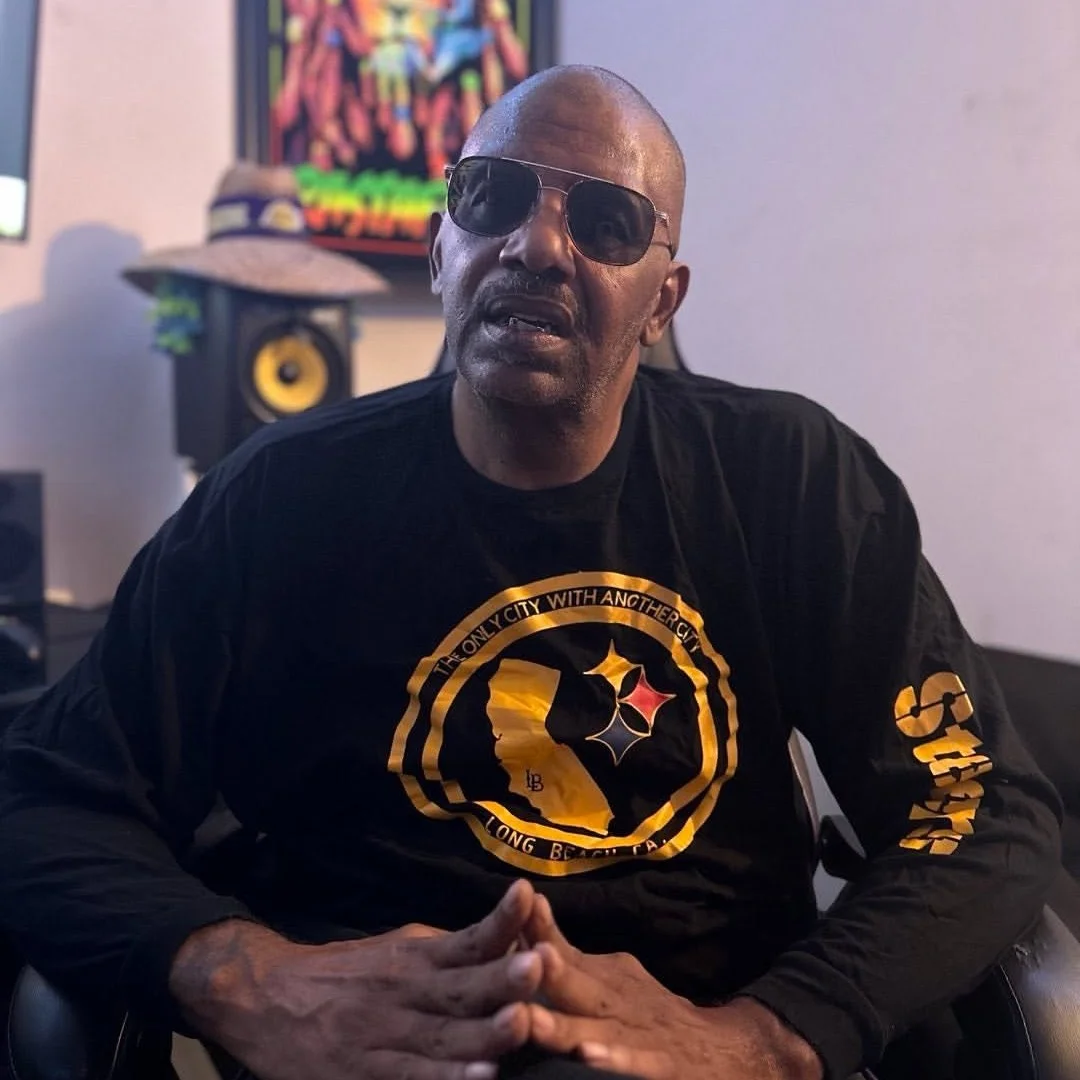
In 1992 a Long Beach rapper named Eric Collins turned up on Dr. Dre's The Chronic as RBX, with verses on "Stranded on Death Row" and "Lyrical Gangbang," and a year later he appeared again on his cousin Snoop Dogg's Doggystyle with "Serial Killa." Those records were sold on cassette and compact disc, years before a single stream was counted anywhere.
Thirty-four years later, Collins went to federal court over a payment system nobody in that room could have pictured. His putative class action against Spotify was filed November 2, 2025 on behalf of rights holders whose content was hosted on the service. It argued that bot farms streaming a superstar's catalog were draining money from everyone else's share of the royalty pool, and that Spotify was negligent for letting it happen.
On Friday (Oct 23), Judge Josephine L. Staton of the U.S. District Court for the Central District of California closed that door for good. Her 16-page order in Collins v. Spotify USA, No. 2:25-cv-10525, dismissed the negligence and California Unfair Competition Law claims with prejudice, finding that "further leave to amend would be futile." The ruling does not decide whether bots inflated anyone's numbers. It decides that, even on RBX's own telling, Spotify owed him no legal duty to stop them.
What the Order Says
The case had already been dismissed once, on June 22, with permission to refile, and our August report on the amended complaint laid out what Collins brought back: claims that a large slice of Drake's Spotify streams came from automated accounts, that the fraud diverted at least $600 million in royalties across 48 months, and that the remedy should include an independent monitor and sign-up friction such as CAPTCHAs. Drake was cited as an example throughout and was never a defendant.
Staton's order quotes the amended complaint describing Drake's "streamshare" as boosted by artificial streaming, and it repeats the allegation that Spotify turned a "blind eye" to artificial plays on tracks from popular artists. At the pleading stage a federal court accepts those factual allegations as true, which is why the opinion spends almost no time on Drake and nearly all of it on the relationship between a streaming platform and the people whose music it carries.
On that relationship, the judge was blunt. "The allegations still show that the parties' relationship is primarily a mutually beneficial economic one," she wrote, adding that it was one "with a power imbalance typical of an economic relationship between a corporate entity and an individual." A footnote turned the complaint's own language against it, noting that Collins had described himself as a "world-renowned performer" and concluding that "Plaintiff is not a small or vulnerable artist."
How a Bot Spends a Rapper's Money
The theory of harm in RBX's case rests on the way Spotify pays for recordings. The order describes the system plainly: the company sets aside a share of its total revenue for rights holders, and each one receives a slice "based on their proportional share of total music streams for that month." Under that pro-rata royalty pool, a fake stream does not create new money. It shrinks the share of every real one.
Spotify has been tightening the edges of that pool for three years. In a November 2023 post to artists, the company announced that "tracks must have reached at least 1,000 streams in the previous 12 months in order to generate recorded royalties." The same post said the company would "start charging labels and distributors per track when flagrant artificial streaming is detected on their content." Those changes went live in April 2024, and the company projected they would move about $1 billion toward emerging and professional artists over five years.
Collins argued that those policies were real but unevenly applied. Spotify says publicly that it runs daily cleaning to strip artificial streams from the counts shown in its app, and the complaint characterized the company as one of the easiest platforms to defraud with bots. The court read that pairing differently. "The alleged facts suggest only that artificial streaming still exists on Spotify," Staton wrote, and she found that Collins had pleaded nothing showing the company skipped the cleaning it describes.
The economics underneath the case are not in dispute, and they echo our September analysis of Meek Mill and the streaming pay math. An artist's royalty depends less on a fixed rate per play than on a share of a pool that everyone, including the fraudsters, is drawing from at once. RBX's complaint tried to turn that structure into a legal duty, and Friday's order is the reason that strategy failed.
Negligence Was a Narrow Door
California negligence law asks first whether a defendant owed the plaintiff a duty of care, and the special relationships that create one tend to involve a party that takes on the role of guardian. Staton found nothing like that here. Streaming activity may affect an artist's career, she reasoned, but that effect "does not transform Spotify's role into one of a protector."
Collins offered a fallback theory, that Spotify had voluntarily assumed a duty by promising to police fraud. That doctrine in California generally requires physical injury, and the order answered it directly: "Here, Spotify's alleged failure to adequately mitigate artificial streaming resulted in no physical harm to Plaintiff." A royalty loss, however large, is an economic injury, and the court treated it that way.
The misrepresentation claims met a similar end. Spotify's statement that it works to "ensure a level playing field," the judge wrote, "does not promise to take any specific action with respect to artificial streaming," and she characterized it as "merely one reflecting its aspirations and goals." The argument that Spotify enforced its rules harder against small acts than large ones fared no better. "This is not a theory of selective enforcement, but of disparate impact," the order says, because the complaint identified no specific rule Spotify had declined to apply.
The Unfair Competition Law claim fell for a structural reason. The statute protects consumers and competitors, and the court found that Collins had not alleged that Spotify's consumers or competitors had suffered any harm. He had alleged harm as a rights holder, a category the statute was not built to reach. The order gave Spotify five days to submit a proposed judgment.
The Fight Moves to Washington and the Ninth Circuit
Collins's lead attorney, Mark Pifko, told Rolling Stone after the ruling, "We are reviewing the order, but an appeal is likely." Any appeal would go to the Ninth Circuit, where the question would be whether California should recognize a duty that Staton twice declined to find. Spotify, for its part, said when the suit was first filed that it "in no way benefits from the industry-wide challenge of artificial streaming."
The more consequential venue may be administrative. On October 7, the U.S. Copyright Office published a notice of inquiry on music streaming fraud, issued in response to a congressional request, asking how bad actors commit fraud, how the industry fights it, and what voluntary, statutory or regulatory fixes could help. That docket is open to anyone with a catalog, including a rapper whose most famous verses predate the streaming era, and it does not require proving that a platform owed anyone a duty.
Criminal enforcement is moving on a separate track. Earlier this month, federal prosecutors in Manhattan announced an 18-month prison sentence for Michael Smith, a North Carolina man who pleaded guilty to conspiracy to commit wire fraud. His scheme used bot accounts to stream hundreds of thousands of AI-generated tracks across Spotify, Apple Music, Amazon Music and YouTube Music. He agreed to forfeit $8,091,843.64, and U.S. Attorney Jamie McDonald said Smith "robbed millions in royalty payments from genuine artists and their fans."
That leaves working artists with three routes after Friday's order, none of them through California tort law. Prosecutors can pursue the fraudsters, distributors and labels can be billed under Spotify's per-track charges, and rights holders can put their own numbers and stories into the federal record. Initial comments to the Copyright Office are due November 23 at 11:59 p.m. Eastern, and replies are due December 21.

Comments (0)
No comments yet — be the first to share your thoughts.
Leave a comment