

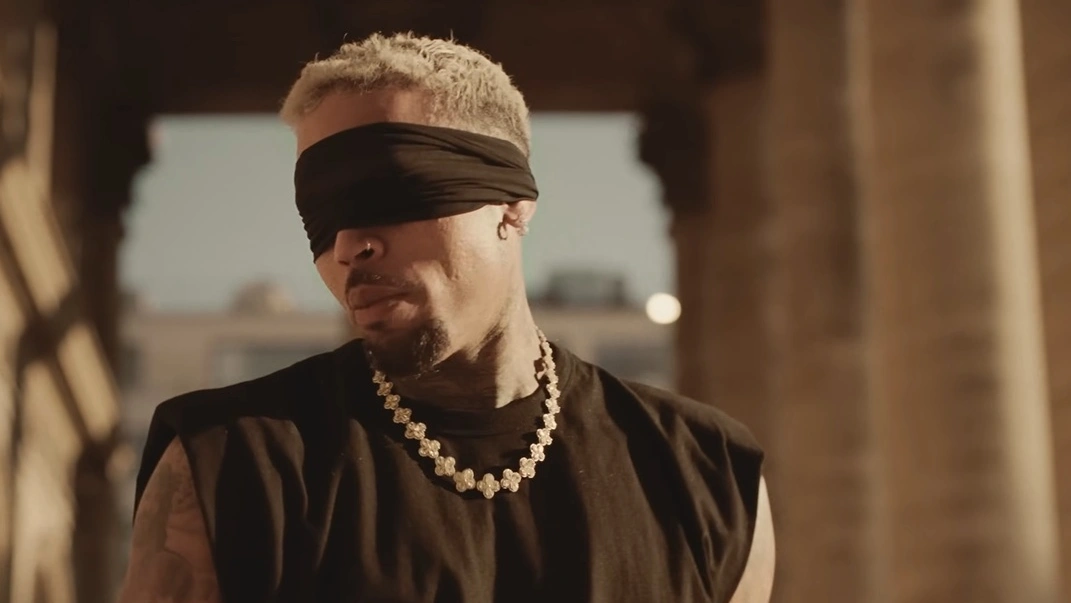
Chris Brown arrived at Southwark Crown Court on Monday morning (Oct 26) behind a mask, sunglasses and a baseball cap. Fans who had traveled from as far as Italy and the Netherlands lined his path into the building, where a London judge was about to decide what his July guilty plea would cost him.
Judge Tony Baumgartner gave the 37-year-old singer eight months in prison, suspended for 12 months, plus £1,500 in costs ($2,000 US). The sentence covers the attack at Tape nightclub in Mayfair in the early hours of Feb. 19, 2023, when Brown struck producer Abraham Diaw twice in the head with a tequila bottle. His vocal coach and co-defendant, Omololu Akinlolu, received four months, also suspended for a year, along with the same £1,500 order. Neither man goes to prison unless he commits another offense before that year runs out.
Before passing sentence, Baumgartner told Brown, "Your fame, commercial success and professional standing do not entitle you to special treatment." Twelve years ago, Brown admitted punching a man outside a Washington hotel, and U.S. Attorney Ronald Machen Jr. offered nearly the same warning. "No matter your status or celebrity, you will be held accountable for such conduct in our city," Machen said. The sentence in that case was time served and $150 in court costs.
HitsCulture laid out the full Chris Brown ledger on the day of the July plea. Monday closed the London chapter, which opened with a charge carrying a potential life sentence and finished at eight suspended months. It also added one more sentencing hearing to a legal record that began in Los Angeles in 2009.
Twenty Seconds at Tape
Prosecutor Heidi Stonecliffe KC told the court that Brown approached Diaw at around 3 a.m. carrying what she called a "heavy square-shaped tequila bottle." Security footage played for the judge showed Brown swinging it at Diaw four times, connecting twice with his head and once with his shoulder. The whole attack lasted roughly 20 seconds, and Brown had to be pulled away from a man reported to be a former friend.
Diaw tried to get away through the club, and prosecutors said he was punched and then kicked while sitting on the floor. Akinlolu joined in with a punch to the head, and his lawyers told the court he "genuinely believed" Brown was "under attack" when he did it. Diaw was treated at St Mary's Hospital and, according to Stonecliffe, discharged with "pain relief and a diagnosis of head injury and superficial injury of the knee."
Baumgartner did not pretend the footage showed something minor. "This was not planned violence," he said. "It was nevertheless serious violence by two people in a crowded nightclub." He was sharper still about the weapon: "The repeated use of a glass bottle in that way, especially aimed at the head, was plainly dangerous, it carried the risk of delivering a more serious injury than was ultimately sustained."
Brown's barrister, Sallie Bennett-Jenkins KC, called the night "an ugly and unattractive incident" and delivered her client's "profound apology" to everyone who was in the club. She described him as "a dedicated and a loving father of four children" who is "positive and present." The judge weighed Brown's two earlier convictions for violence, from 2009 and 2013, calling them "relevant because of their nature" but "now old." Against them he set the guilty plea, the singer's stable employment and his charity work.
From a Life Maximum to Three Years: How the Charges Shrank
Brown left Britain after the 2023 incident and did not return until May 2025. Metropolitan Police detectives arrested him at 2 a.m. at the Lowry Hotel in Manchester, about a month before the U.K. leg of his tour was due to open. He spent nearly a week in custody before Baumgartner released him on a £5 million security. The conditions kept him away from Tape and from Diaw but allowed him to tour Europe, the United States and Canada.
On June 20, 2025, hours after a stadium show in Cardiff, Brown stood in the dock and denied attempting to cause grievous bodily harm with intent, answering "Not guilty, ma'am." Under the Offences Against the Person Act 1861, causing grievous bodily harm with intent carries a maximum of life imprisonment, and an attempt carries the same ceiling. Three weeks later he also denied assault occasioning actual bodily harm and possessing an offensive weapon. The court set a five to seven-day trial for Oct. 26, 2026.
That trial never came. On July 24 of this year, Brown and Akinlolu each pleaded guilty to affray, and prosecutors dropped the three other counts. Section 3 of the Public Order Act 1986 defines affray as using or threatening unlawful violence in a way that would make a person of reasonable firmness at the scene fear for their safety. Its maximum is three years. The Crown no longer had to prove that Brown meant to cause serious harm, and Brown no longer had to gamble on a jury watching that footage.
The plea also changed the sentencing math. Under the Sentencing Council's guideline, a defendant who admits an offense at the first opportunity can earn up to a one-third reduction. The credit shrinks for later pleas, falling toward one-tenth on the first day of trial, and Brown pleaded three months before his trial date after more than a year of denials. English law then allows a judge to suspend any prison term between 14 days and two years.
Brown's suspended term runs until October 2027. If he is convicted of a new offense committed during that window, a court can order him to serve the eight months.
2009 to 2014: Probation, Rehab and a Hotel Sidewalk in Washington
The record Baumgartner called old begins in February 2009, when Brown, then 19, assaulted Rihanna, his girlfriend at the time, in a car in Los Angeles hours before the Grammy Awards. He pleaded guilty to felony assault that June. In August, Los Angeles Superior Court Judge Patricia Schnegg sentenced him to five years of probation, a yearlong domestic violence program and 1,400 hours of labor. At an earlier hearing she had told the court, "I do not favor community service," because she wanted him outdoors doing roadside cleanup and graffiti removal. His probation moved to his home state of Virginia, with the labor overseen by Richmond's police chief.
Brown was still on that probation in the early hours of Oct. 27, 2013, outside the W Hotel in downtown Washington. A 20-year-old named Parker Adams tried to step into a photo two women were taking with the singer, and prosecutors said Brown punched him in the face. The arrest reopened the probation case in Los Angeles, where a judge ordered Brown into rehab for anger management. When the facility discharged him in March 2014 for breaking its rules, he went to jail on March 14 and stayed there until June.
That June, Brown turned down a Washington plea deal that would have sentenced him to time served, because it required him to admit a statement of facts he disputed. He took a plea that September instead, admitting misdemeanor simple assault before Judge A. Franklin Burgess Jr. The charge carried up to 180 days, and Burgess accepted time served, citing in part the views of the victim, with $150 in costs. Brown's California probation from the Rihanna case ran into early 2015, six years after the assault.
Other matters in the years since did not end in convictions. A judge granted Brown's former girlfriend Karrueche Tran a five-year restraining order in 2017. French police detained him in Paris in January 2019 over a rape allegation he denied, then released him without charge. In Los Angeles this June, a civil jury awarded $12.9 million to a former housekeeper mauled by his dog. In September a judge cut that figure to $9.5 million unless she chooses a new trial on damages.
The Box Office Kept a Separate Record
Between his not-guilty pleas and his guilty one, Brown ran the most successful tour of his career. Breezy Bowl XX, his first stadium tour, grossed $295.5 million and sold just under two million tickets across 49 shows, according to figures reported to Billboard Boxscore. That was more than three times the gross of any earlier Brown tour. Its London date at Tottenham Hotspur Stadium came the night after he denied the grievous bodily harm charge at Southwark.
The people who ran that tour heard the box office as an answer to the business. "It's just good to see in his own world what he's accomplishing, especially when the industry turned their backs on him," said Tone Lopez, whose HansTolo Enterprises handled tour management. He made the remark to Pollstar after the run closed with an average ticket price of $144.73.
The calendar kept stacking. Brown won his second Grammy for best R&B album with 11:11 (Deluxe) in February 2025, three months before the Manchester arrest. This year he went back into stadiums with Usher on The R&B Tour, which grew to 59 dates in August, a month after his plea. Earlier this month, four of those stadium dates were pulled in Baltimore, Cincinnati, Columbia and Indianapolis. Every one of them was a first-time city added after he admitted the affray.
Outside Southwark on Monday, the fans who had waited since morning cheered as security walked Brown to a black car. Akinlolu left the same building with the same £1,500 bill and half the suspended term.
What the Two Sentences Share
The Washington case and the London case followed nearly the same path. Both started with a felony allegation, a punch in one and a bottle in the other, that was reduced before Brown ever faced a jury. Both ended with Brown admitting a lesser offense, an official declaring that celebrity earned him no leniency, and a sentence that kept him out of a cell that day.
The longest stretch Brown has spent in jail came from neither of those courtrooms. It came from Los Angeles in 2014, when a probation judge enforced the terms of the Rihanna sentence. Baumgartner's order now hands a London court that same kind of leverage until October 2027, eighteen years after Schnegg told Brown she did not favor community service.
Comments (0)
No comments yet — be the first to share your thoughts.
Leave a comment