

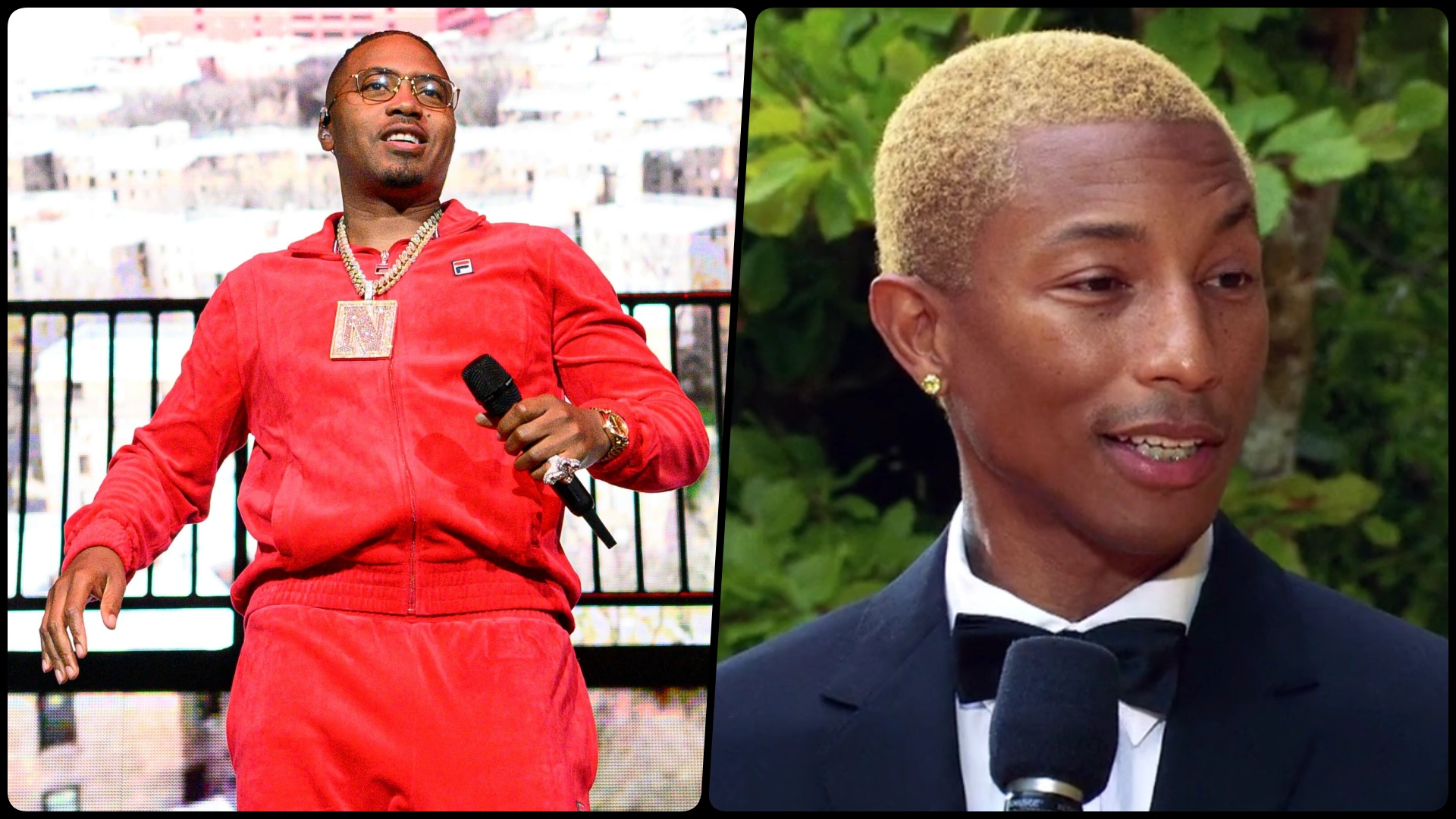
On a Sunday night in March 2021, Nas won a Grammy for the first time, at 47, after thirteen nominations spread across more than two decades of records. The winning album was King's Disease, released the previous August, and it carried a single producer credit where almost every Nas record before it had carried a committee. Hit-Boy built the whole thing. The two of them kept going until September 14, 2023, when Mass Appeal shipped Magic 3 as the sixth consecutive Nas album Hit-Boy produced from front to back.
Five years on, the arrangement that looked like a late-career experiment has become one of the most elaborate structure in rap and R&B. Pharrell Williams has produced two complete albums for two different acts inside fifteen months, with a third finished and waiting on a date, and the first of those two won its artists their first Grammy after sixteen years away. The one-producer album is not new. It is the oldest working arrangement in this music, and the records currently carrying it are the ones collecting the trophies.
Handing one set of hands the beat selection, the sequencing, the key changes and the arguments produces a record that moves like one long thought rather than a playlist assembled from a dozen vendors, and the current run of these albums suggests artists deep into their catalogs are the ones willing to make that trade.
The Form Was Normal Before It Was Rare
In May 1968, Stax lost the rights to its own back catalog under a clause with Atlantic Records. Al Bell countered by releasing 27 albums and 30 singles at once, giving the label new inventory to replace the masters it no longer controlled. Hits Culture examined how the agreement worked and where those recordings sit after the BMG and Concord consolidation earlier this month. One key release from that rebuilding effort was Isaac Hayes’ Hot Buttered Soul, issued in June 1969 on Stax’s Enterprise imprint.
Hot Buttered Soul contained just four tracks, but its running time and arrangements made the album a landmark in soul music. “By the Time I Get to Phoenix” lasts 18 minutes and 42 seconds, including an eight-minute spoken introduction before the main melody appears. “Walk On By” runs 12 minutes and 3 seconds, supported by a slow-burning string arrangement. After Hayes’ 1968 debut failed to make a commercial impact, he pushed for full creative control. Johnny Allen arranged the charts in Detroit, while Hayes, Allen Jones and Marvell Thomas received producer credits. The album reached No. 1 on Billboard’s R&B chart in August 1969, climbed to No. 8 on the Billboard 200 in October and eventually earned gold certification.
Hayes was not listed as the album’s producer, yet the four-song structure, extended monologues and unhurried tempos reflected his artistic decisions. That creative freedom gave Hot Buttered Soul its defining strength: space. Instead of rushing to the hook, the album makes listeners wait, settle in and follow the arrangement. For artists and labels, the lesson is simple: a focused concept and room to develop can turn a risky format into a breakthrough.
What One Set of Hands Actually Buys
Single-producer rap albums are often treated as a gold-standard format, but hip-hop has rarely followed the model as strictly as its mythology suggests. Pete Rock and C.L. Smooth’s Mecca and the Soul Brother, released by Elektra on June 9, 1992, is widely remembered as a one-producer classic. Nevelle Hodge co-produced “Lots of Lovin’,” while Large Professor co-produced “Act Like You Know.” The album reached No. 43 on the Billboard 200 and No. 7 on the R&B chart.
The Nas and Hit-Boy run is the clearest modern example of the arrangement. From 2020 through 2023, the pair released six consecutive albums across two trilogies, built entirely around one producer’s beats. That is a notable commitment in an era when many veteran rappers release one album every few years with production from a long list of contributors. The first project, King’s Disease, also ended a gap that had stretched back to Nas’s twenties.
Quavo offered a useful view of the arrangement from inside while discussing Pharrell’s executive production on Qromelife. “Working with P, he going to challenge you,” he said. That challenge was structural as much as sonic. Pharrell questioned the shape of each song and asked what every section contributed. For artists and producers, the takeaway is practical: define the album’s creative rules early, then test whether each verse, hook, and transition earns its place. That level of focus is harder to maintain when nine producers each submit a beat and move on.
Sixteen Tracks From a Room Inside Louis Vuitton
Pharrell became menswear creative director at Louis Vuitton in February 2023 and built a recording studio inside the company's Paris headquarters, with the design studio and the music studio sitting adjacent. We reported that the layout lets a fitting and a vocal session happen inside 90 minutes without anyone leaving the building, which quietly removes the studio clock and the label calendar from the process.
Clipse made Let God Sort Em Out in that system and released it on July 11, 2025 through Roc Nation distribution, sixteen years after Til the Casket Drops. Thirteen tracks, Pharrell on every one of them, nothing from an outside board. It opened at number four on the Billboard 200 with 118,000 album-equivalent units, 58,000 of those pure sales, and in February 2026 "Chains & Whips" took Best Rap Performance at the 68th Grammy Awards, the first Grammy either brother had won.
John Legend sang on that album. Fifteen months later the arrangement runs the other direction, with Legend's eleventh studio album Muse arriving October 23 on Republic Records, all 16 tracks produced and co-written by Pharrell, and Clipse turning up at track twelve on "Bodies On The Floor." The lead single "Daylight" came out September 8.
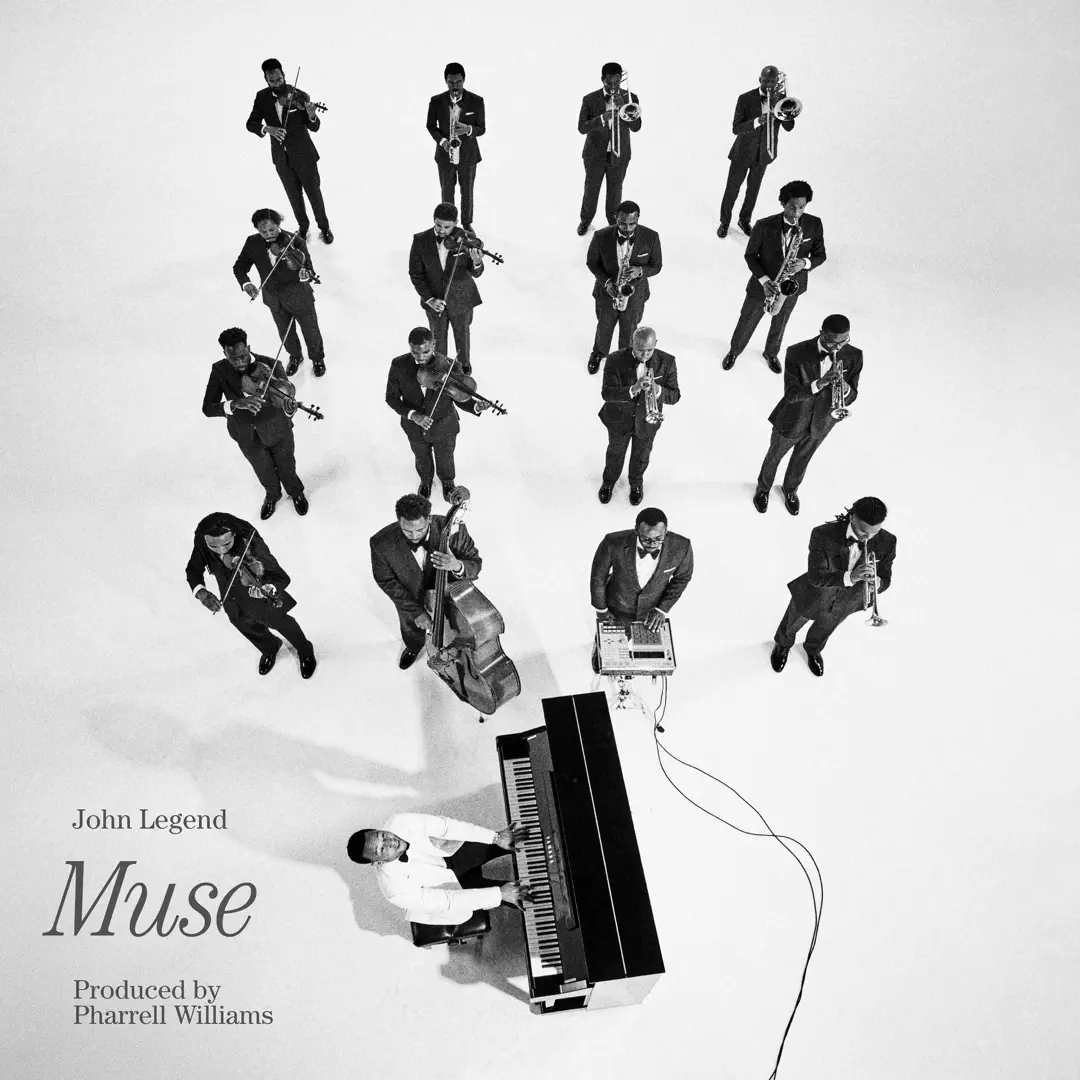
Prior to the forthocming opus, Legend spent the last twenty years building a career on piano ballads, and he was direct about wanting out from under it. "I think my repertoire has always been very diverse, but the piano-driven ballads have gotten the most traction," he said, before describing the remedy as handing someone else the keys. "I wanted to shake up the formula and do something fresh and new." The sessions ran at the Louis Vuitton offices in Paris around what Legend called a "Black James Bond aesthetic."
Then came the concession most established artists will not make. "I recorded some songs on this album that he fully wrote, which I almost never do," Legend said, describing a room where disputes got settled by a standard other than whose name goes on the cover. "It's not about winning the argument or ego. It's about the music winning." Asked what the title pointed at, he did not name a person. "Our ancestors are our muses."
The Part Nobody Advertises
Giving one producer an entire album takes away the safety net a committee provides, because the record then succeeds or fails as a single decision made months before anyone hears it. Every artist in this run had already exhausted the other version. Hayes got control in 1969 only after his first album failed and Stax had little left to protect. Nas was 47 and thirteen nominations deep. Legend is eleven albums into a sound he now wants to rest, and Clipse had been silent for sixteen years.
A single-producer record is not a confidence play by artists at their commercial peak, it is what people reach for when the assembled version of their career has stopped returning what it used to. The upside is that the resulting records are legible. You can hear who made them.
Pusha T's solo album is finished with Pharrell as sole producer and carries no release date. Muse arrives October 23 with sixteen tracks.

Comments (0)
No comments yet — be the first to share your thoughts.
Leave a comment