

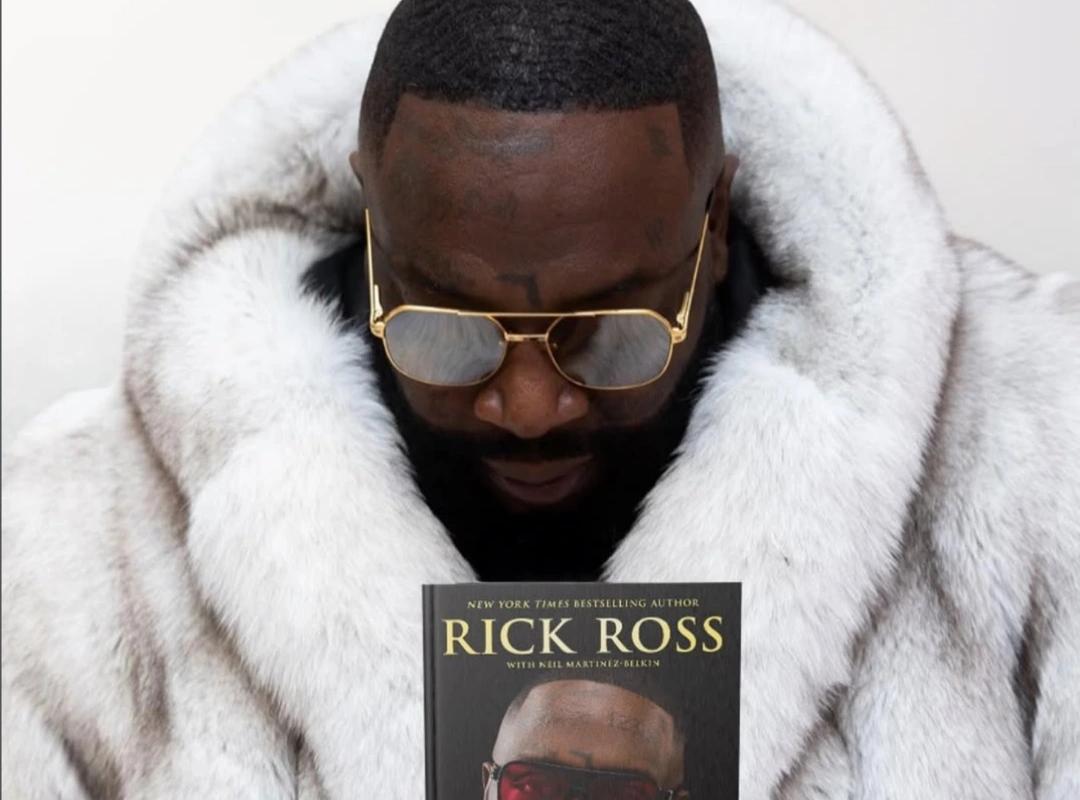
A full orchestra. A gospel choir. A new album that landed five weeks late and a debut record reborn as prestige theater. At 50, Rick Ross is not running a nostalgia lap. He is showing the rest of rap how to age like an asset.
Picture a rapper standing center stage in a tuxedo, conducting a forty-piece orchestra and a robed choir through songs he wrote two decades ago about selling weight in South Florida. That is the image Rick Ross opened his summer with, and it tells you everything about the move he is making. On July 17, five weeks after its original June 12 target, he released Set In Stone, his twelfth solo album, timed to the twentieth anniversary of his debut Port of Miami, which he has been marking all summer with a black-tie orchestral tour. This is the veteran's gambit, and Rozay is playing it better than almost anyone in hip-hop.
The short version: while younger artists chase the algorithm one disposable single at a time, Ross is doing the opposite. He is treating his catalog like a fortune, his anniversary like a state occasion, and his longevity like the ultimate flex. In an era obsessed with what is next, the most powerful thing a rapper can own turns out to be what already happened.
The Port of Miami 20th Anniversary Black-Tie Experience kicked off May 29 at Miami's James L. Knight Center, backed by a full Renaissance Orchestra and the Sainted Trap Choir, with surprise guests DJ Khaled, Trina, and Uncle Luke joining the homecoming. It runs seventeen cities through late August, and by every account it is far more than a nostalgia run. Ross framed it plainly, calling Port of Miami the blueprint to the biggest boss and saying that twenty years later, "we aren't just celebrating an album; we are elevating the culture."
That word, elevating, is the whole strategy. By staging trap music in a tuxedo with strings and a choir, Ross is arguing that luxury rap deserves the same prestige treatment as jazz or soul, that this music is archival, orchestral, worthy of a concert hall. It is also a flex of ownership. Ross controls his catalog and his label, Maybach Music, which is exactly why he can repackage and re-monetize his own history on his own terms, a dynamic we unpacked in our piece on how artist ownership is reshaping Black music this June. You cannot throw yourself a coronation if someone else owns the crown.
The runway to all this was a Verzuz. On May 7, Ross squared off against longtime collaborator French Montana in a nineteen-round Complex and Apple Music battle that leaned hard into the blog-era, luxury-rap peak both men helped define. Hits like "Hustlin'" and "B.M.F." traded blows with "Unforgettable" and "Ain't Worried About Nothin'," Max B made a surprise appearance that detonated the room, and when the votes were tallied, French edged it out ten rounds to nine.
Here is the thing, though. Ross losing the scorecard did not cost him anything. The Verzuz nostalgia economy does not reward who technically wins. It rewards whose catalog still moves a crowd twenty years later, and it functions as a feature-length advertisement for exactly the kind of legacy victory lap Ross is now running. The battle was never really a competition. It was a trailer. By the time Set In Stone finally arrived, five weeks behind its original date, fans had already spent ten weeks rediscovering why Ross mattered in the first place.
That momentum was no accident either. Ross spent those extra weeks seeding the runway to the album, rolling out the luxury-soaked single "Minks in Miami" and then reuniting with French and Max B on "Smoking Pt. 2" in the immediate wake of the battle. Each release functioned less like a standalone song and more like another plank in the platform, keeping his name in rotation and his catalog in the conversation straight through to release week. It is a masterclass in controlling your own narrative, the rollout engineered as carefully as the music, and it is the kind of patient, compounding strategy that only makes sense if you are playing a long game rather than chasing a weekend spike. If anything, the delay only stretched that runway further.
The most talked-about moment of that night had nothing to do with French. Preparing to perform "Aston Martin Music," his 2010 classic featuring Drake, Ross instructed the DJ to strip Drake's vocals out entirely. "No Drake vocals," he told the crowd, before inviting them to sing the missing parts themselves. Given the fracture between the two since Drake's 2024 jabs, the move read as a clean, public power play, erasing his estranged collaborator from one of their biggest shared hits and letting the audience prove the song never needed him.
What makes it sharp rather than petty is the restraint around it. Ross later said he does not actually want to see Drake lose, encouraging the Toronto star to keep shining, which is the posture of someone who sees himself as an elder statesman rather than a combatant. It is a flex available only to a veteran with nothing left to prove, the same Drake whose every move we broke down in our full decode of the subliminals on Iceman. Ross does not need the round. He already owns the catalog, the label, and the room.
Ross is not alone in this. Across hip-hop, longevity has quietly become the new status symbol. The streaming era flooded the market with infinite, disposable music, and in that flood, the artists who built deep, owned catalogs in the album era suddenly hold something scarce: a body of work people are still emotionally invested in two decades later. A twentieth anniversary is no longer a quiet milestone. It is an asset class.
You can see the same logic rippling across the genre. Anniversary tours, deluxe reissues, and catalog-driven Verzuz matchups have quietly become some of the most dependable money in rap, precisely because they trade on loyalty that took decades to build and cannot be faked overnight. A new artist can go viral in a single weekend. Only a veteran can fill a venue on the strength of songs a crowd has loved for twenty years, and only a veteran who kept his masters gets to collect the full reward for doing it. That kind of equity is the one thing the streaming churn cannot replicate, and the savviest old heads in the game are finally cashing it in instead of pretending they still need to compete with the kids.
This is also where the business brain matters as much as the bars. Ross has spent two decades turning a rap persona into a genuine empire, from Maybach Music to restaurants to spirits to his books on building a boss mentality, the kind of long-game brand architecture our partners at Infinity Agent Solutions break down for entrepreneurs scaling their own ventures. The lesson is identical whether you sell records or services. Own your name, build the catalog, and let time do the compounding.
So now that Set In Stone has finally landed, do not read it as an aging rapper clinging to relevance. Read it as a 50-year-old mogul demonstrating that in 2026, the smartest play in rap is not virality. It is permanence. Ross titled the album perfectly. Twenty years in, his place is not up for debate. It is set in stone.
Comments (0)
No comments yet — be the first to share your thoughts.
Leave a comment