

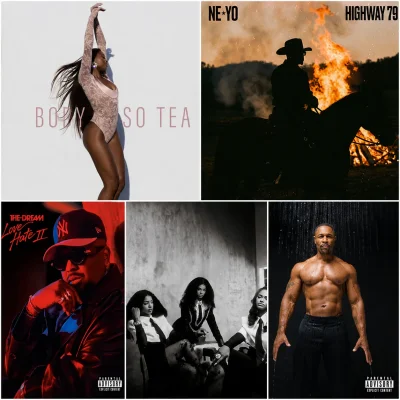
There is a specific kind of paralysis that hits on a Friday in the middle of summer, thumb hovering over a release feed, when it feels like every artist you have ever cared about decided to drop on the same afternoon. July 2026 has been that feeling stretched across four straight weeks. Veterans, new-gen provocateurs, and quiet R&B talents all crowded the same calendar, and the result is a logjam so dense that the real question is no longer what came out. It is what deserves your ears.
Here is our answer, and it is the whole reason a site like this exists: when everybody drops at once, human curation is the only way out. An algorithm will hand you whatever is loudest and most recent. A person who actually loves this music can tell you which of July's flood is a genuine event and which is content filling a quota. This month made the difference obvious.
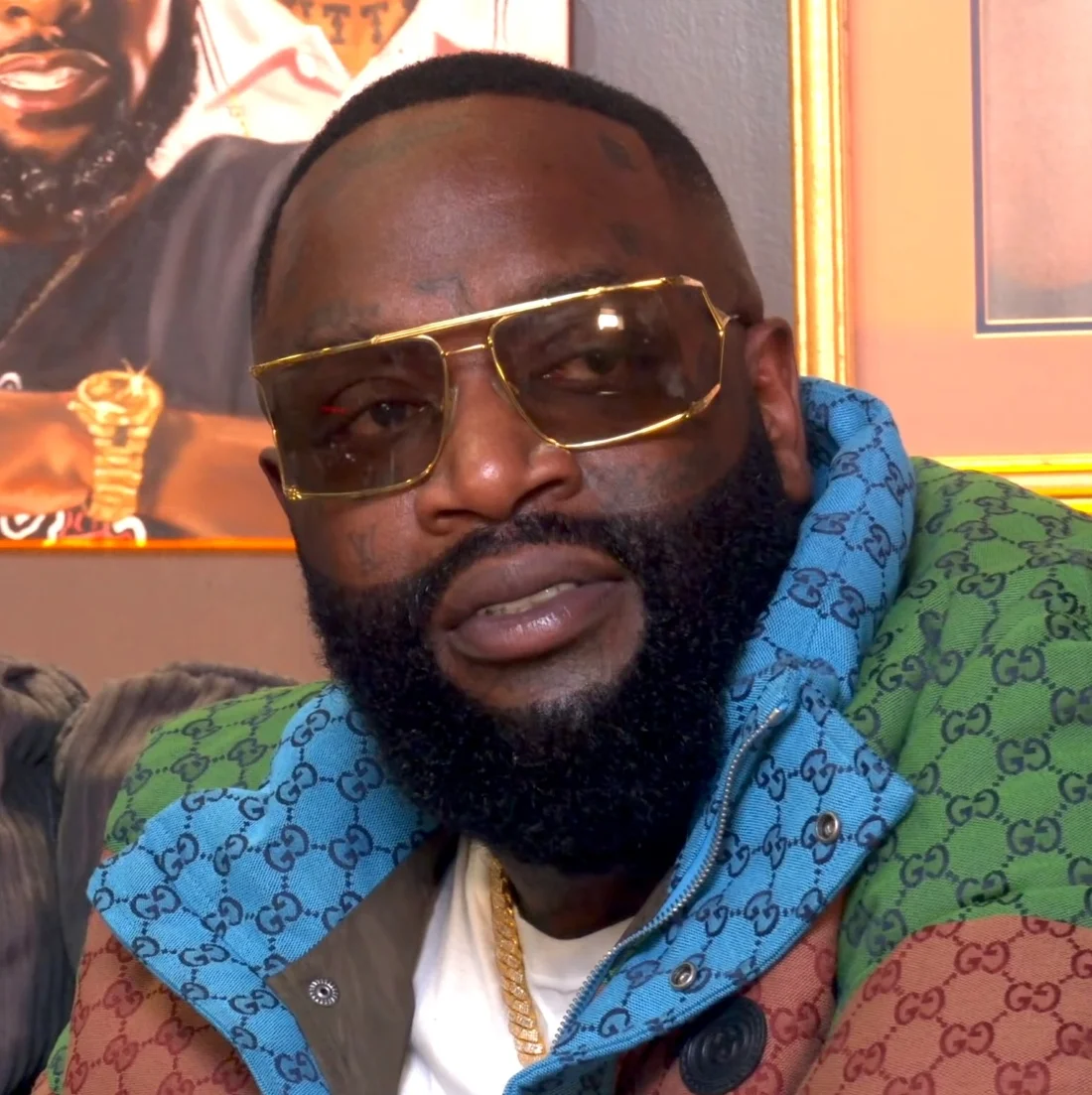
The centerpiece of mid-July was Rick Ross returning on the 18th with Set In Stone, his twelfth studio album, and the tracklist told on itself. Nearly every song carried a feature, a guest list running from Jeezy and BigXthaPlug to The-Dream and Leon Thomas. One critic put it perfectly, saying Ross was "coming straight for the algorithm," stacking collaborators the way a playlist stacks skip-proof names. And yet the strategy barely moved the needle where it counts: Set In Stone opened with just 17,189 album-equivalent units, a soft first week that even drew a jab from 50 Cent and a clap-back from Rozay himself. That gap is the whole story. Loading a tracklist with names that flatter a recommendation engine is not the same as making an album people rush to own, and it rewards exactly the kind of listener who can separate a great Rozay verse from a track built to game the system.
Ross was not alone in the elder-statesman lane. Future opened the month with The Real Me, and the reissue economy showed up in force: Jodeci returned Forever My Lady for its 35th anniversary, remastered for Dolby Atmos with bonus tracks and a tour on the way. That kind of legacy continuity is one of our favorite stories to tell, the same thread we followed when Jon B returned with his first album in over a decade. Careers do not end anymore. They loop, reissue, and re-enter, and a good R&B catalog is now a living asset rather than a museum piece.
On the other side of the calendar, the younger hip-hop class refused to surrender a single weekend. Ken Carson pushed xperiment early in the month, part of a rage-adjacent wave that keeps testing how far distortion and energy can carry a project. Larry June kept his unbothered, grown-man luxury rap moving with Who Coppin, Tory Lanez surfaced with MADE YOU THINK I WAS GONE...BUT, and Lil Baby teased "Dead Fresh," his first collaboration with Pharrell Williams, premiered at the Louis Vuitton show in Paris. The generational contrast is the story of the month: the veterans leaning on features and nostalgia, the newcomers leaning on volume and spectacle, everyone fighting for the same finite attention. See new music releases here.
If you only watched the rap headlines, you missed where July got genuinely great. Steve Lacy released oh yeah?, calling it the culmination of a four-year journey and pulling in SZA, Erykah Badu, and Cecile Believe, a guest list that signals ambition rather than algorithm-chasing. Syd offered the intimate, expertly produced Beard. Ambré delivered PEYOTE, an album she framed around transformation and the lessons of evolution, and Tinashe dropped "Crash Out" ahead of her Popstar album due in late September.
None of this is a coincidence. R&B has spent the last several cycles rebuilding an audience that wants feeling over formula, the kind of listener who will sit with a full project instead of a fifteen-second clip. The artists answering that call, Lacy, Syd, Ambré, and the wave around Kehlani, whose work we track on her HitsCulture artist page, are making music engineered for repeat listens rather than a single viral moment. In a month this crowded, that durability is the whole ballgame.
It is worth naming the force that turned July into a pileup in the first place. In the streaming era, release dates are strategy, not scheduling. Labels chase the Friday refresh, front-load features to survive the playlists, and flood the calendar because the model rewards volume and recency over patience. That is why a month can hold two dozen major projects and still feel like it forgot half of them by the following Monday. The economics push everyone to shout at the same time, and the listener is left holding the noise.
This is the exact gap a curated, fan-first outlet is built to close. Transparency about how the product gets made, why an album is stuffed with guests, why a legacy act suddenly reappears remastered, why a great record can vanish under a louder one, is not cynicism. It is respect for the reader, and it is the connective tissue of an honest artist guide. When you understand the machinery, you stop mistaking a marketing push for a moment, and you start hearing the new music that was made to last rather than to trend.
So what do you do with two dozen projects and a limited number of hours? You stop trying to hear everything, which is the trap the feed sets for you. Pick your lanes and go deep. If you want an event, Steve Lacy's oh yeah? and the Jodeci reissue are the ones to sit with start to finish. If you want the pulse of where rap's veterans are maneuvering, Set In Stone is a case study in strategy, features and all. If you want the future, Ken Carson and the Lil Baby and Pharrell pairing tell you where the energy is heading.
The point of a filtered, human-led take is not to tell you what to like. It is to give you back the hours the algorithm would spend feeding you the loudest thing. A recommendation engine measures what is popular. A curator measures what is good, and those two numbers drift apart more every year. July 2026 was the proof, a month so stacked that the only sane way through it was to trust a person who listened to all of it so you would not have to.
A logjam is not a problem to be solved by listening faster. It is an invitation to listen better. The releases that will still matter in December, the Lacy record, the Jodeci restoration, the handful of rap projects with a real point of view, are already visible if you know how to look past the volume. That looking is the work. It is what separates a cultural outlet with a point of view from a feed with a refresh button, and in a month like this one, it is the difference between hearing everything and hearing what counts. Press play with intention this month, and the logjam stops being a burden and starts being what it should have been all along, an embarrassment of riches you actually get to enjoy.
Comments (0)
No comments yet — be the first to share your thoughts.
Leave a comment