

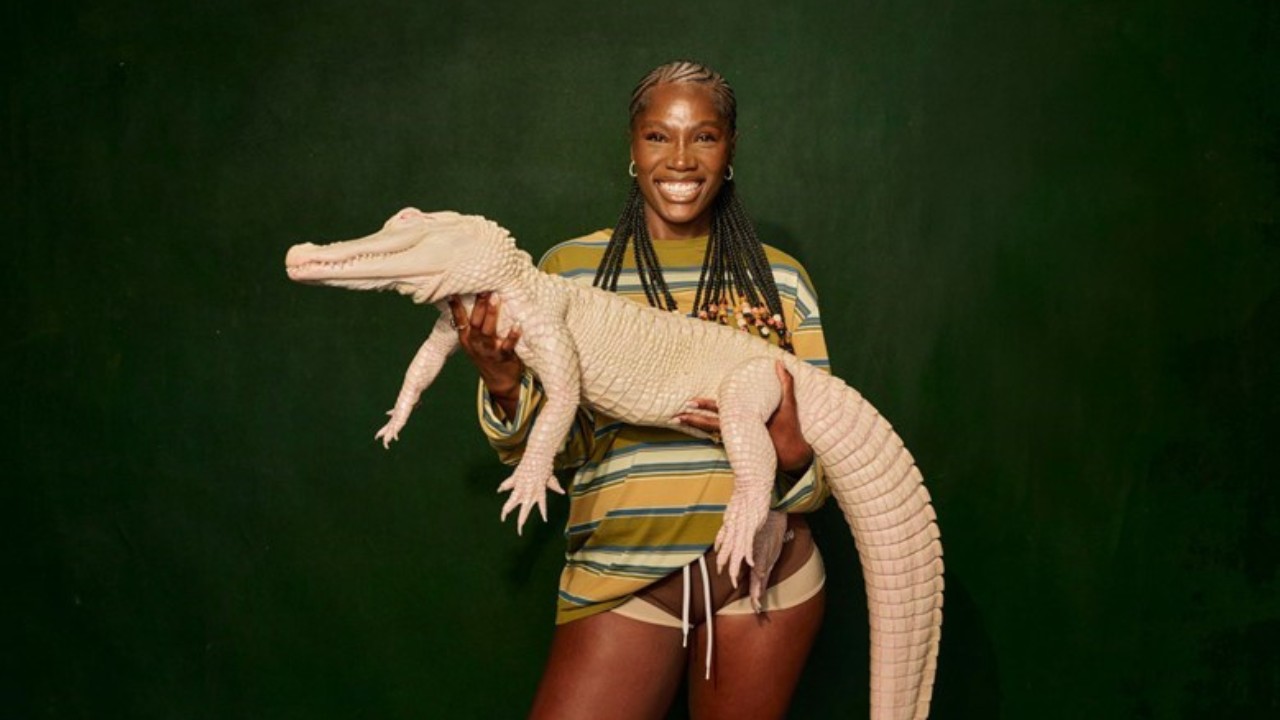
When Doechii walked off the Crypto.com Arena stage in February 2025 clutching Best Rap Album, she made a class of three. Lauryn Hill in 1999. Cardi B in 2019. Doechii in 2025. Three women in thirty years of the category. Then February 2026 rolled around. Doechii returned to the same building with five nominations, faced Kendrick Lamar in every rap category the ballot lets you face him in, and left with a Best Music Video trophy for the Anxiety visual. GloRilla got a Best Rap Album nomination for GLORIOUS and lost to Kendrick's GNX. The Recording Academy had a whole year to keep the momentum going for women in rap. It gave the room back to the men.
That is the story Doechii's Grammy win actually tells, and it is a more complicated story than the coronation narrative that ran through last February. Because the Grammy record for female rappers is not a straight line of progress. It is a staircase of very specific, very isolated victories, most of them earned by singing on someone else's record, hosting a hook, or making the one solo album so undeniable the room could no longer look away. The women below did all of that. What none of them have done yet, and what the 2026 ceremony made painfully clear, is take home the trophy hip-hop has been chasing since OutKast won it and put it down in 2004. That is still the ceiling. That is still where the fight is.
Doechii: The 2025 Ceiling, and the 2026 Correction the Academy Refused to Make
Alligator Bites Never Heal was not supposed to win. It was a mixtape, which the category had only accepted once before, from Chance the Rapper in 2017. It was on Top Dawg Entertainment, released without the arena-tour promotional infrastructure the men in the category had behind them. And it went twenty songs deep on the kind of shape-shifting, gospel-inflected, alternatively-produced rap that award season historically underrates. Doechii walked out of the 2025 ceremony as the third woman ever to win Best Rap Album, dedicated her Grammy to Black girls in her acceptance speech, and closed 2025 as Billboard's Woman of the Year with the most-streamed project by any female rapper on Spotify that year (1.4 billion streams).
Then 2026 happened. Doechii returned to the ceremony with five nominations, including Record of the Year, Song of the Year, Best Rap Performance, Best Rap Song, and Best Music Video, all for "Anxiety." She faced Kendrick Lamar head to head in every rap category on the ballot. She won one trophy, Best Music Video, and left. Kendrick swept the rap categories and passed Jay-Z as the most-Grammy-decorated rapper in history. Doechii's 2025 win, in other words, did not open the door for the next woman. It became the exception the Academy immediately closed the door back on. That is not a failure of Doechii's material. It is what happens when a room decides the story is over the moment it starts.
1. Lauryn Hill: The Only Woman in Rap Who Ever Reached the Room's Top Shelf
Twenty-seven years later, The Miseducation of Lauryn Hill is still doing the impossible work of standing as both a rap album and a Recording Academy touchstone. In 1999, Hill did not just win Best Rap Album. She became the first rapper of any gender to win Album of the Year, and she took home five Grammys that night. The Academy has spent the quarter century since acting as though it wasn't sure whether that happened.
Hill's win reads differently in 2026 than it did in 1999. Back then it was framed as a coronation of a new star. In hindsight, it looks like an outlier the room quietly closed the door on. No woman rapping has come within striking distance of Album of the Year in the twenty-seven years since. J. Cole, Doja Cat, Drake, and countless others still name-check her as origin story. But origin stories are only meaningful when someone finishes the sentence, and that sentence is still hanging in the air. What Hill built, no one has been given the runway to build on top of.
2. Cardi B: The Bronx Made the Room Watch Her Do It
Twenty years after Hill, Cardi B walked into the room the Recording Academy had spent two decades refusing to open. Invasion of Privacy was the first solo album by a woman to win Best Rap Album, and it won on its own terms. Not on a feature. Not on a collaboration. On the strength of one Bronx native with a former stripper's audio confessional, a diamond-certified single in "Bodak Yellow," and a bar-for-bar assurance that critics still underestimated because they had underestimated her voice from the moment she first went viral on Instagram.
Cardi has spent the seven years since her win building the case that Invasion of Privacy was not the peak. Am I the Drama?, released September 2025, debuted at number one on the Billboard 200 with 200,000 album-equivalent units. That made her the only female rapper whose first two studio albums both debuted at number one. Eighteen tracks from the album charted on the Hot 100 in one week. She has since taken home Outstanding Album at the NAACP Image Awards, Best Hip-Hop Album at the American Music Awards, and led the 2026 BET Awards nominations with six nods. What has not happened yet, and this is the through line, is a second Best Rap Album trophy. She is nominated again on the 2027 ballot. The Academy has one more chance to correct the pattern.
3. Missy Elliott: The Genre Blueprint the Academy Kept Boxing Into a Side Category
Missy Elliott is the most influential rap producer, visual innovator, and vocal stylist of her generation, and the Recording Academy responded by putting her in the Best Female Rap Solo Performance category, a category so quietly dropped after 2004 that most fans forget it existed. She won it in 2003 for "Scream a.k.a. Itchin'" and again in 2004 for "Work It." She had won it a year earlier, in 2002, for "Get Ur Freak On." Four Grammys total, none of them in the room's main rap categories.
That is the pattern worth naming. The Academy created a separate track for women in rap, handed the trophies out, then eliminated the track without moving the winners over to the main category. Missy inspired Ice Spice, Doechii, Tyler, the Creator, and half the visual language of every rap music video that broke in the last decade. The Rock and Roll Hall of Fame inducted her in 2023. The Grammys still owe her an honorary conversation about what the main rap categories would look like if she had been let inside them at the peak of her run.
4. Queen Latifah: Demanding the Respect the Category Had Not Been Built to Give
Queen Latifah won Best Rap Solo Performance in 1995 for "U.N.I.T.Y.," a record built around street harassment, domestic violence, and misogyny inside the genre itself. The category she won in did not have a category for her album to win in. Best Rap Album did not yet exist. That is worth stopping on. The Academy did not create the album prize until later in 1995, which means Latifah's win happened inside a rap Grammy structure that literally did not yet imagine women could carry full projects. She won inside a room that was not ready for her.
Latifah went on to build the actor-producer-mogul career that every rapper since has tried to model on. What she should also be remembered for is being one of the first women in this genre who used the trophy speech as a labor position paper. Her win didn't just clear a runway. It named what the runway had been keeping women off of in the first place.
5. Eve: The Crossover Record With the Grit Still In It
Eve won Best Rap Sung Collaboration in 2002 for "Let Me Blow Ya Mind" with Gwen Stefani, the first female rapper to take that category. What matters about the win is what she refused to give up to get it. The song is a pop record. Eve's verses are not. She held the pitbull-in-a-skirt Ruff Ryders bark inside a Dr. Dre production and a Stefani hook, and she still walked away with the trophy without either audience feeling condescended to. That is a very hard thing to do. Most crossovers before her had traded rap credibility for pop reach. Eve refused to make the trade, and the Recording Academy gave her a Grammy anyway. It is one of the more quietly instructive wins in the category's history.
BONUS:
Megan Thee Stallion: The Rap Grammy Sweep Everyone Underrates in Hindsight
Somehow, in the last version of this story, we forgot to talk about the Houston hot girl who broke the ceiling nobody thought was breakable. In 2021, at the 63rd Grammy Awards, Megan Thee Stallion became the second female rapper ever to win Best New Artist, after Lauryn Hill in 1999. That night, "Savage Remix" with Beyonce won Best Rap Performance and Best Rap Song. It was the first all-female collaboration ever to win Best Rap Performance in the category's history. Megan walked out with three Grammys in a single evening.
The reason the Megan sweep gets underrated in the female-rap Grammy conversation is that it happened at a strange moment. The category was mid-transition, the ceremony was pandemic-era and remote, and the culture was pulled in a hundred different directions. But looking back at it now, with the Doechii template written and the GloRilla nomination sitting one year fresh, Megan's 2021 run is a template. Three Grammys in a night, a Best New Artist to sit alongside Lauryn's, and a Best Rap Performance win that made the room formally acknowledge two women could carry a Grammy-winning rap record together without either of them being a hook singer. Every "female rap moment" the industry keeps calling unprecedented is standing on that night.
Honorable Mentions: Lil' Kim, MC Lyte, and Da Brat
Lil' Kim won Best Pop Collaboration in 2002 for "Lady Marmalade" with Christina Aguilera, Mya, and Pink. It is a pop category, on a pop record, from a pop soundtrack, and every rap writer who tries to shave it out of Kim's Grammy history is trying too hard. The trophy counts. What matters more is that Kim's work made the sexual and sartorial vocabulary of every female rapper after her possible. Cardi is a Kim record. Latto is a Kim record. Sexyy Red is a Kim record. Doja Cat, at her rap peak, is a Kim record.
MC Lyte was the first female rapper to release a solo album, in 1988, before the industry believed the format could carry a woman's voice. Da Brat became the first female rapper to go platinum, in 1994, before the industry believed the sales math worked. Neither of them won a Grammy, and the specific injustice of that absence is a story the Academy has never bothered to answer for.
GloRilla and the 2026 Ballot: The Field Widened, the Trophy Did Not Move
GloRilla, the Memphis rapper who arrived commercially in 2022 and has not left the top of the female rap charts since, became the fourth woman to earn a solo Best Rap Album nomination when GLORIOUS landed on the 2026 ballot. She sat in the category alongside Kendrick Lamar, Tyler, the Creator, JID, and Clipse. Her debut album moved 69,000 first-week units, the highest opening for any female rapper in 2024. She landed at number one on Billboard's Top Rap Artist Female chart for 2025. She got two Best Rap Song nominations at the 2026 ceremony, one as lead artist ("TGIF"), one as featured artist on Tyler's "Sticky." She did not win any of them.
What matters is the shape of the ballot. Between GloRilla's nomination and Doechii's five nominations, women pulled roughly as many rap-category nominations at the 2026 ceremony as the men did. And the men still took every trophy. The nomination footprint is finally starting to look proportional to how much of the commercial and creative weight women are actually carrying in the genre. The winners' circle is still not.
The Ceiling Nobody Has Broken: Album of the Year
Here is the sentence the Recording Academy has been trying not to have written about it for twenty-two years. OutKast is still the only hip-hop act to have won Album of the Year, for Speakerboxxx/The Love Below, in 2004. Lauryn Hill remains the only rapper of any gender to have won the top prize as a lead artist, in 1999. No solo woman rapping as her primary lane has come within a serious ballot's reach of the category since.
Cardi is nominated on the 2027 ballot. Doechii will be nominated again. GloRilla is one album cycle away from being in the room. The women running rap in 2026 (a list that also runs through Latto, JT, Rapsody, Doja Cat, Ice Spice, Flo Milli, Monaleo, and Sexyy Red) are the deepest bench the genre has ever put on a Grammy ballot. The ceiling is Album of the Year, and no woman rapping has been let through it in the twenty-seven years since Lauryn. That is the record the next queen has to break. Not another Best Rap Album trophy. The one above it.
Who's Next
The obvious three-way, in order: Cardi in February 2027, off the album that has now been out long enough for the room to have to reckon with it. Doechii on whatever full-length she delivers next, because a mixtape got her to the ceiling once and the Academy will not give a second one the same benefit of the doubt. GloRilla on the album cycle after GLORIOUS, if she pushes the ceiling on the alternative side of Memphis rap the way she has hinted she can.
What the culture actually needs, and what would matter more than any single trophy, is for the Grammy ballot to stop treating any of the above as a solo miracle. There are enough women in rap right now to build a Best Rap Album shortlist entirely out of them, and the room would be better for it. Doechii's win was the ceiling. It should have been the floor. What happens next depends on whether any of them get the runway Lauryn Hill got exactly once, and no one has been handed since.
Comments (0)
No comments yet — be the first to share your thoughts.
Leave a comment