

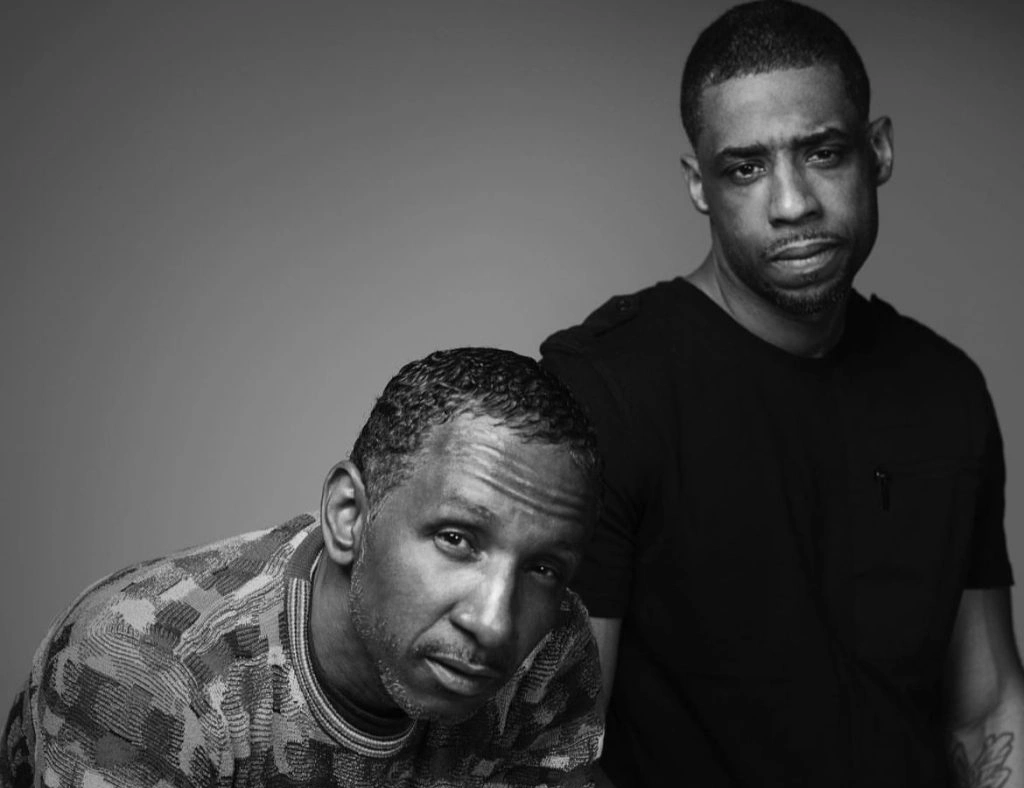
In January 2023, the two men behind one of the best-known records of the Native Tongues era filed a class action in federal court in Manhattan over money they had never seen on a statement. Andres Titus and William McLean, who recorded as Black Sheep and released A Wolf in Sheep's Clothing on Mercury in 1991, argued that Universal Music Group had accepted lower royalty rates from Spotify in 2008 in exchange for an ownership stake, and that artists were owed half of what that stake was worth.
Universal called the claim "patently false and absurd," and Judge Jennifer L. Rochon of the Southern District of New York threw the case out on Nov. 20, 2023. "The contract's plain language does not support Plaintiffs' theories of breach," she wrote in Titus v. UMG Recordings, and she denied the duo a chance to amend because, in her words, it "would be futile."
Three years later, the stock Black Sheep sued over is being sold. Universal confirmed on April 29 that it would sell half of its Spotify holding to help pay for its own share buybacks, and by the end of June it had sold just under a third of that planned sale for about $467 million. The company has told investors that artists will share in the proceeds. It has not published the percentage, the formula that decides which artists get what, or the date the money lands on a royalty statement.
A Stake Handed Out in 2008
Spotify launched in 2008 needing licenses from every major label at once, and the majors, along with the independent licensing body Merlin, came away holding equity in the company. Music Business Worldwide reported in 2018 that those stakes were thought to track each company's global market share, and that Sony's slice alone stood at 5.7 percent when Spotify went public that spring.
Universal's holding was smaller in percentage terms but enormous in money. At the end of 2025 the company held 6,487,000 Spotify shares, a 3.10 percent stake it valued at $3.605 billion, according to figures reported by Music Business Worldwide when Universal wrapped up about $1.16 billion in stock buybacks in September.
The heart of the Black Sheep complaint was the trade it alleged sat underneath that stake. If a label takes a lower per-stream rate in exchange for shares, every artist paid a percentage of the label's receipts absorbs part of the discount, while the upside lands on the corporate balance sheet. Universal denied any such trade, and the court decided the case on the contract rather than on that allegation.
Rochon's reasoning turned on the phrase that governs most legacy rap deals: net receipts. Royalties under the Black Sheep contract attached to money traceable to the exploitation of the duo's recordings, and the judge found the Spotify stock "not solely attributable or traceable" to any particular artist's masters. She also held that a two-year limitations clause in the contract barred the stock claims as untimely.
The 2018 Template
Universal is not the first major to cash out, and the two companies that went before it took different routes on the detail that matters most to older catalogs. Sony sold half of its 5.7 percent holding in 2018 for $768 million and agreed to set aside artists' unrecouped balances when it paid them. Warner sold its entire stake that August for $504 million gross and credited 25 percent to artist accounts, but it applied those credits against what artists still owed.
That gap between a credit and a check is the whole story for a large part of the hip-hop and R&B catalog from the 1980s and 1990s. An artist carrying an unrecouped balance from advances, video budgets and tour support can see a Spotify windfall posted to the account and swallowed by the deficit before a dollar moves. Under a non-recoupable payout, the same money is paid out regardless of what the ledger says.
Universal's own policy traces to a contract negotiation in November 2018, when Taylor Swift announced her move to Republic and wrote that she had asked that "any sale of their Spotify shares result in a distribution of money to their artists, non-recoupable." Universal agreed, and Music Business Worldwide reported in August that the company's commitment still runs on that non-recoupable basis.
What Universal Has Said, in Its Own Words
The company's public language on the artist share has barely moved in eight years. In March 2018, before Spotify listed, Universal said that "consistent with UMG's approach to artist compensation, artists would share in the proceeds of a [Spotify] equity sale." In April 2026, chief financial officer Matt Ellis said payouts would be "consistent with our royalty policies."
On the July 30 earnings call, Ellis gave the only hard number Universal has put on the sale so far, telling analysts the company "sold just under one-third of our planned 50% stake sale" for gross proceeds of about $467 million. He described the rest of the sale as "still in process." Universal's third-quarter results on Oct. 29 centered on streaming growth, with paid streaming revenue up 20.7 percent year over year to about $1.58 billion.
The closest thing to a public estimate of the artist share comes from outside the company. In April, Bill Ackman's Pershing Square put the gross value of Universal's full Spotify stake at about $3.1 billion and estimated that $1.7 billion would reach Universal after taxes and net of the artists' portion. Working from those figures, Music Business Worldwide estimated in an August analysis that artists would receive about 28 percent of gross proceeds, which puts roughly $131 million against the first $467 million sold.
The estimate is arithmetic on an investor's model rather than a figure Universal has confirmed, and it describes a pool, not a payment. How a pool of that size is divided across a roster that runs from current chart acts to Mercury, Def Jam, Motown and Island catalogs decades deep is the part no public document explains.
The Questions a Royalty Department Can Answer
The first is allocation. Spotify's own payouts run through a pro-rata pool that divides revenue by share of streams, a mechanism HitsCulture walked through when a federal judge dismissed RBX's suit against Spotify in October. Whether Universal divides equity proceeds the same way, by an artist's share of Spotify income over a fixed period, or by some other measure, decides whether a catalog that streamed heavily in 2012 but quietly in 2026 is treated like one that runs the other way.
The second is reach. A payout written for royalty artists may look different, or may not exist, for acts on distribution or label services agreements, where the artist keeps ownership and the company takes a fee instead of paying a royalty rate. Those structures, which HitsCulture laid out in its guide to distribution and label services deals, did not exist in their current form when the 2008 equity was issued.
The third is timing and paperwork. An artist or estate can ask which statement period will carry the payment, whether it will appear as a separate line, and whether Universal will treat it as non-recoupable across every contract on the roster or only the newer ones. Producers and featured artists who are paid a royalty through the label have a parallel question about whether any share follows the money to them.
Independent labels sit in a different chain entirely. The 2008 equity on their side was issued to Merlin rather than to any label's artists, so whatever reaches a rapper signed to an indie depends on the terms running between Merlin, the label and the contract the artist signed, which can leave that rapper two agreements removed from a stake his streams helped build.
Where the Black Sheep Ruling Leaves Everyone Else
Rochon did not decide whether artists deserve a share of Spotify equity, and Universal has spent eight years saying they will get one. What the ruling settled is narrower and more practical: for a contract built on net receipts, a court found that the stock was not money earned from an artist's recordings, and a short contractual deadline closed the door on suing over it.
That leaves the size of the artist share in the hands of the company paying it, set by policy and disclosed when the company chooses. Universal still held about 5.4 million Spotify shares after the first-half sales, roughly a 2.6 percent stake, with about $1 billion of it earmarked to finish the planned sale, according to Music Business Worldwide's August accounting.
Black Sheep's "The Choice Is Yours" turned 35 this year. Whatever Universal decides to pay on its Spotify shares will reach artists through the same royalty statements Titus and McLean went to court to read.
Comments (0)
No comments yet — be the first to share your thoughts.
Leave a comment