

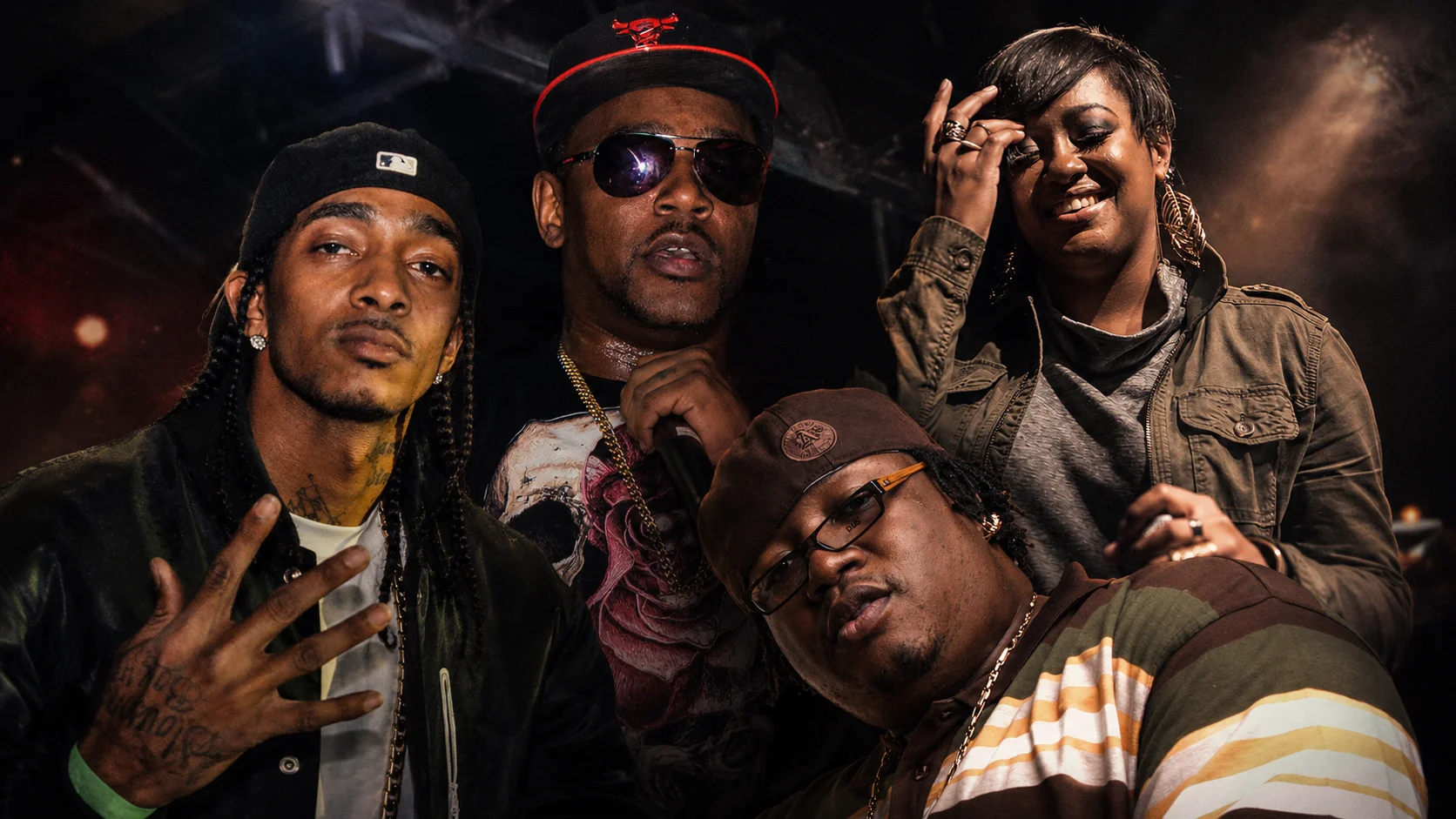
This is a demanding month for rap veterans who have remained active and one of the clearest reminders this year that human ears and judgment still matter.
Look at what is dropping in August and then tell me the algorithm run this. E-40, deep into his fourth decade, is putting out Turning My Money Over. Cam'ron is back with Frederica. Inspectah Deck, the Wu's quiet assassin, has Dragon's Breath loaded. Rapsody is delivering God Gotta Afro & Gold Hoops. Paul Wall and Termanology, Open Mike Eagle and Kenny Segal, Tobe Nwigwe, Czarface, all of them clustered into a single month.
August’s release calendar feels deliberately curated, offering a thoughtful lineup rather than the unpredictable mix typically shaped by streaming algorithms. A recommendation engine chases the new, the young, and the frictionless. It is built to feed you more of what you already finished, and it has almost no idea what to do with a forty-something rapper releasing his best work to an audience that buys albums and shows up to shows. Although the platform treats this as a feature, it also creates a cultural gap, one that human-led curation can address by adding context, judgment, and relevance that automated systems often miss.
The veterans are not coasting
Judge the month’s releases on their own merits. This is a lineup of hip-hop veterans creating relevant, present-day music, not simply revisiting their past or relying on nostalgia. E-40’s catalog has a distinctive vocabulary, and each new release feels less like a victory lap than a lesson in his evolving language. Cam’ron, meanwhile, still sounds completely himself on record. It's as if no one told him the rap game had changed. Inspectah Deck writing dense, coiled verses in 2026 is a reminder that the standard the Wu-Tang Clan set was never about being new, it was about being undeniable. The common thread is mature hip-hop: music created by artists with the perspective to say something meaningful and the technical skill to make it resonate.
Rapsody sits at the center of that argument. Her whole career has been a bet that lyricism still moves people when the writing is honest and the pen is sharp, and God Gotta Afro & Gold Hoops arrives as another entry in a run too few playlists bother to track. We made the case for exactly this kind of writer in our look at the artists carrying the torch from Rakim to Nas to Kendrick, and Rapsody belongs in any serious version of that conversation.
This month’s hip-hop releases span a notable range of styles. Tobe Nwigwe channels spoken-word intensity into The Bridge, while Open Mike Eagle and Kenny Segal reunite for layered art rap that rewards repeated listens. Paul Wall and Termanology connect Houston and Boston on a cross-regional collaboration, highlighting the month’s breadth and creative ambition. None of these fit a single mood-based playlist, which is precisely why they need a human to point at them and say, this one, listen. Sort by vibe and they scatter. Sorted by a person who knows the culture, they line up into the strongest month of the year.
E-40’s career reflects decades of influence in hip-hop: he began recording before many current chart stars were born, helped shape the genre’s slang, and built a reputation for releasing new music with remarkable consistency. “Turning My Money Over” is not a farewell. It showcases an artist who recognized the business early and continues to work on his own terms. If a recommendation algorithm promotes a 15-second clip over his verses, that reflects the platform’s priorities, not the quality, relevance, or staying power of his work.
Independence is the quiet story
Most of these projects share a trait the charts undersell. They are built outside the major-label machine, by artists who own their names and their schedule. Independent rap has spent a decade turning into a viable career rather than a consolation prize, and August is what that maturity looks like at scale, a dozen self-directed releases landing in the same window because their makers decided so, not because a marketing calendar told them to.
That independence is why these are, in the truest sense, catalog artists. They are not chasing a viral single. They are adding to a body of work meant to still make sense in ten years, which is the opposite of how the platform economy wants music to behave. A catalog rewards patience. The feed punishes it.
The economics underneath this are what make it durable. Artists who own their releases keep a larger share of each sale, ticket, and membership, allowing a loyal audience to support a career that a major label might abandon for missing streaming targets. The lesson is practical: build direct relationships, diversify revenue, and prioritize repeat customers over viral reach. That model rewards depth over virality, the exact opposite of what the platforms optimize for, and it is a big reason so much of the most substantial rap now arrives from outside the majors. The middle class of hip-hop did not disappear. It went independent and stopped asking permission.
Prolific and the weight of a legacy
One release this month carries a different kind of gravity. Prolific, the long-promised project from Nipsey Hussle and Bino Rideaux, is set for release this month, led by the single "Sacrifices." Handling music from an artist who is gone is the hardest job in this business, and it is where legacy continuity either honors a person or exploits them. The early sign here is the right one, a partner who shared the room with Nipsey continuing a body of work rather than a label mining a vault. Nipsey called it "The Marathon Continues," and a marathon, run right, is handed off, not cashed in.
An algorithm can recommend a Nipsey Hussle song, but it cannot understand what it means for Bino Rideaux to complete one, or why listeners who value that music expect it to be finished with care, not rushed for release. That context is uniquely human, and it explains why music curation remains essential in the streaming era.
This does not mean young or viral artists should be excluded. A healthy music culture makes room for emerging voices, established veterans, skilled writers, and independent artists. The problem is that algorithms automatically amplify only some of them. Others depend on knowledgeable curators who can recognize their value, provide context, and guide their work to the right audience. The final connection between an artist and a listener still requires judgment, taste, and cultural understanding, qualities software cannot replace.
Why this month is the argument
We have written before about the flood, the roughly ninety thousand tracks a day now pouring onto the platforms and drowning everything that needs context to appreciate. Our piece on why hip-hop still needs human ears laid out the scale of it. August 2026 is the counterargument in practice. In a month this crowded, the releases that deserve your time are precisely the ones a machine is least equipped to surface, the veterans, the writers, the independents building something that lasts. Finding them is not a technical problem. It is a taste problem, and taste is still ours.
Make August a month for intentional listening. Play E-40, spend time with Rapsody, and give Prolific’s music the attention it demands. Streaming platforms will keep promoting the newest and loudest releases, but lasting music often comes through personal recommendation. Build an August playlist from trusted voices, listen beyond the algorithm, and share the tracks that stay with you after the feed moves on.

Comments (0)
No comments yet — be the first to share your thoughts.
Leave a comment