

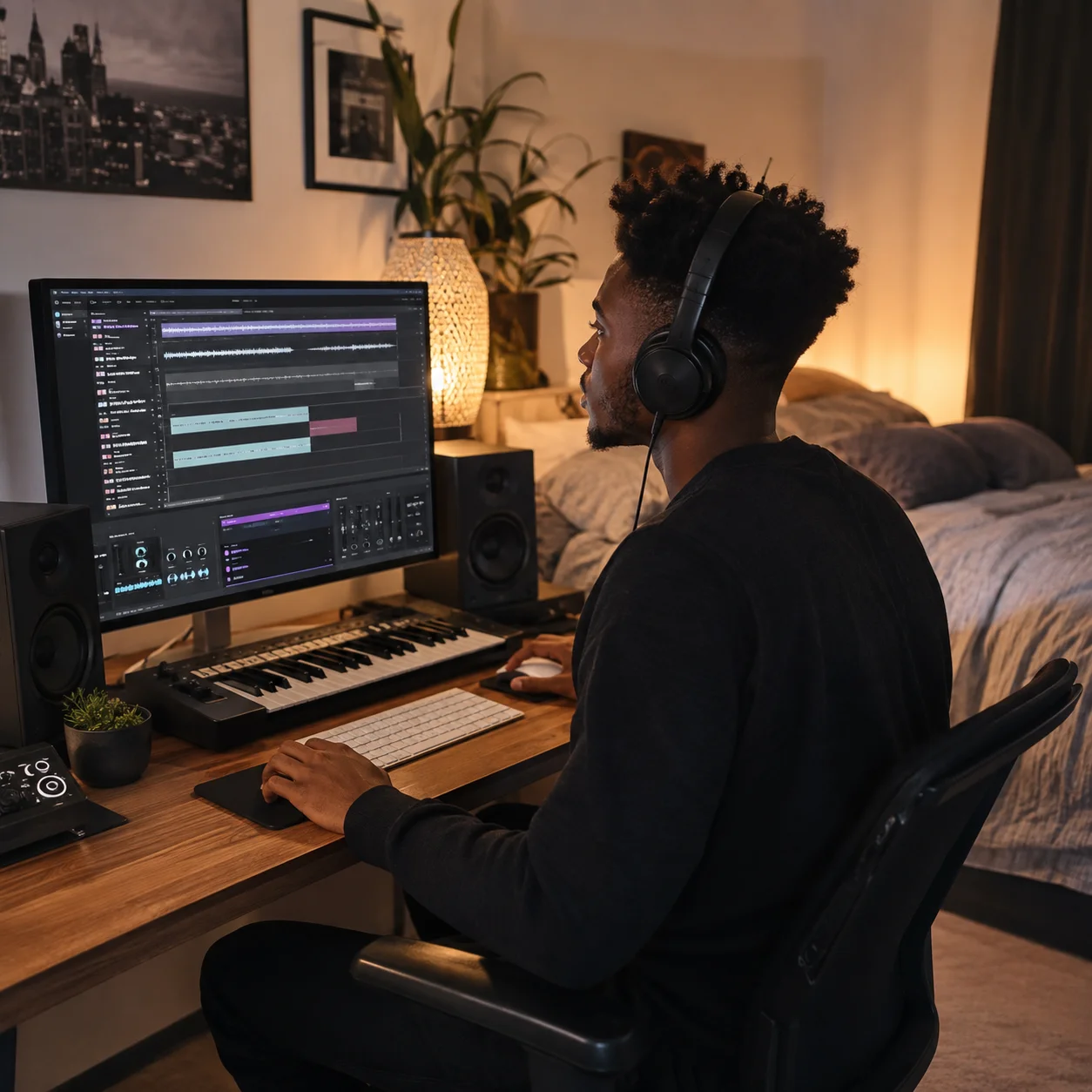
Somewhere in the time it takes you to read this sentence, a few dozen machine-made songs will land on a streaming service, tagged and titled and ready to sit in a feed next to something a person bled to make. That is not a metaphor. In June 2026, the streamer Deezer reported that it was receiving about 90,000 AI-generated tracks a day, and that for the first time more than half of everything uploaded to the platform was made by a machine. In January the figure was 39 percent. By spring it crossed the line. The flood is not coming. The flood is here, and it is rising fast.
Here is where HitsCulture stands, plainly. The value of human-led curation was always our argument, but it used to be a preference. Now it is a defense. When most of what hits a platform is synthetic, a curator with taste and a reason to care is the difference between a feed that reflects a culture and a feed that dilutes it. This is our answer to the machine, and it matters most for the music that built this site: hip-hop and R&B.
The Numbers Behind the Flood
Start with the scale, because it is the whole story. Deezer's count climbed from 60,000 daily AI tracks in January to about 75,000 in April to roughly 90,000 in June, according to TechCrunch. Half the pipe, machine-made. But the more revealing figure is what happens after upload. Even as AI-generated music made up around 44 percent of uploads, it accounted for under 3 percent of actual streams. Almost nobody is choosing this music. So who is playing it?
Mostly bots. Industry analysis has found that the majority of streams on AI songs are fraudulent, generated to skim royalties from a shared pool. That is the quiet crime here. Every fake play is payment dilution, a fraction of a cent siphoned away from the human artists sharing the same payout. It is why we keep returning to this beat, from our reporting on the RBX streaming-fraud case to the long-running math of why millions of plays still isn't paying most artists. The AI music flood did not invent streaming fraud. It industrialized it.
Listeners Already Voted, and They Voted No
The reassuring part is that people are not fooled. Luminate research reported by NPR found that net listener interest in AI music fell from negative 13 percent to negative 20 percent over six months in 2025. Not lukewarm. Negative and getting worse. The souring is sharpest among Gen Z and Gen Alpha, the exact listeners the industry spends its life chasing, and it is harshest when a machine imitates a real artist. One Luminate analyst, Audrey Schomer, summed up the public mood on AI music in two words: "net negative."
Sit with the gap. Half of new uploads are synthetic, and the audience's appetite for it is underwater. That mismatch is not a market. It is a supply glut with no demand behind it, propped up by fake plays. Which tells you the flood is not about listeners at all. It is about gaming the payout, and the culture is collateral.
The Squeeze on Hip-Hop and R&B
Now layer in a second trend, because timing is everything. The genre that runs this culture is contracting on the charts at the exact moment the machine supply explodes. Luminate's 2026 midyear report showed R&B and hip-hop streaming share slipping about 1.6 percent against the prior year, and its share of the Billboard 200 album chart sliding from roughly 40 percent in the first half of 2023 to about 30 percent in the first half of 2026. It is still the top genre, still about one in four streams. But the trend line matters, and we broke it down in our piece on why hip-hop's streaming share is shrinking.
Put the two facts next to each other. Human hip-hop and R&B are fighting for a smaller slice of attention while an ocean of machine-made filler pours into the same feeds. In that environment, discovery stops being neutral. If the algorithm treats a bot-inflated AI track and a real artist's debut as equal inputs, the real artist loses shelf space they never should have had to defend. Protecting cultural integrity is no longer an abstract value. It is a fight over the last few inches of the feed.
Even the Platforms Are Curating Now
Here is the tell that our side of the argument is winning on the merits. Deezer announced it will delete AI tracks that go unstreamed for six months or that are tied to fraud. Strip away the corporate language and that is a platform admitting the open floodgate was a mistake and reaching for a filter. Curation by deletion is still curation. It is a machine-scale confession that a feed with no human judgment in it becomes unusable.
You can see the same instinct everywhere taste reasserts itself. When a former president released a summer playlist this year, it traveled precisely because a person with a point of view chose those songs, a small act the algorithm could never replicate, which we wrote about in the Obama playlist as a case for human curation. That is the algorithm alternative in miniature. Not a better machine. A trusted human, on the record, saying this one, not that one.
What Human Curation Actually Protects
Skeptics will say AI is here, adoption is inevitable, and gatekeeping is just nostalgia. Some of that is fair. The tools are not going away, and plenty of artists will use them honestly. But inevitability is not the same as surrender. The question was never whether machines can make sound. It is who decides what rises, and on what grounds. Consider the AI act "Breaking Rust," which logged around 19 million United States streams and topped a digital sales chart this year. That is real reach. It is also, tellingly, not a Hot 100 hit, which is to say the machine can manufacture volume but not yet the cultural weight a community confers.
There is a longer history in this, and hip-hop of all genres should recognize it. This is a culture built by people who were told, again and again, that the official channels were not for them, and who built their own channels anyway. The mixtape was curation. The corner DJ was curation. The blog era, the group chat passing around a link, the older cousin making you a CD, all of it was a human deciding what deserved your attention and vouching for it with their name. Handing that judgment to a system optimized for engagement was always going to end with the system serving whatever games it best. The machines did not break the culture's discovery. They exposed how much of it we had already outsourced.
That weight is the thing worth guarding. Fan-first advocacy means using human ears to make sure a real artist's release is not buried under machine noise, that the streams a song earns are earned, and that the money follows the work. It is unglamorous. It looks like reading credits, checking whether plays are real, and refusing to treat a bot-farmed upload as equal to a person's late nights. In a feed drowning in 90,000 machines a day, that refusal is the whole job. The algorithm will serve you whatever survives its math. Someone has to stand in front of the culture and say which of it is actually ours.
Comments (0)
No comments yet — be the first to share your thoughts.
Leave a comment