

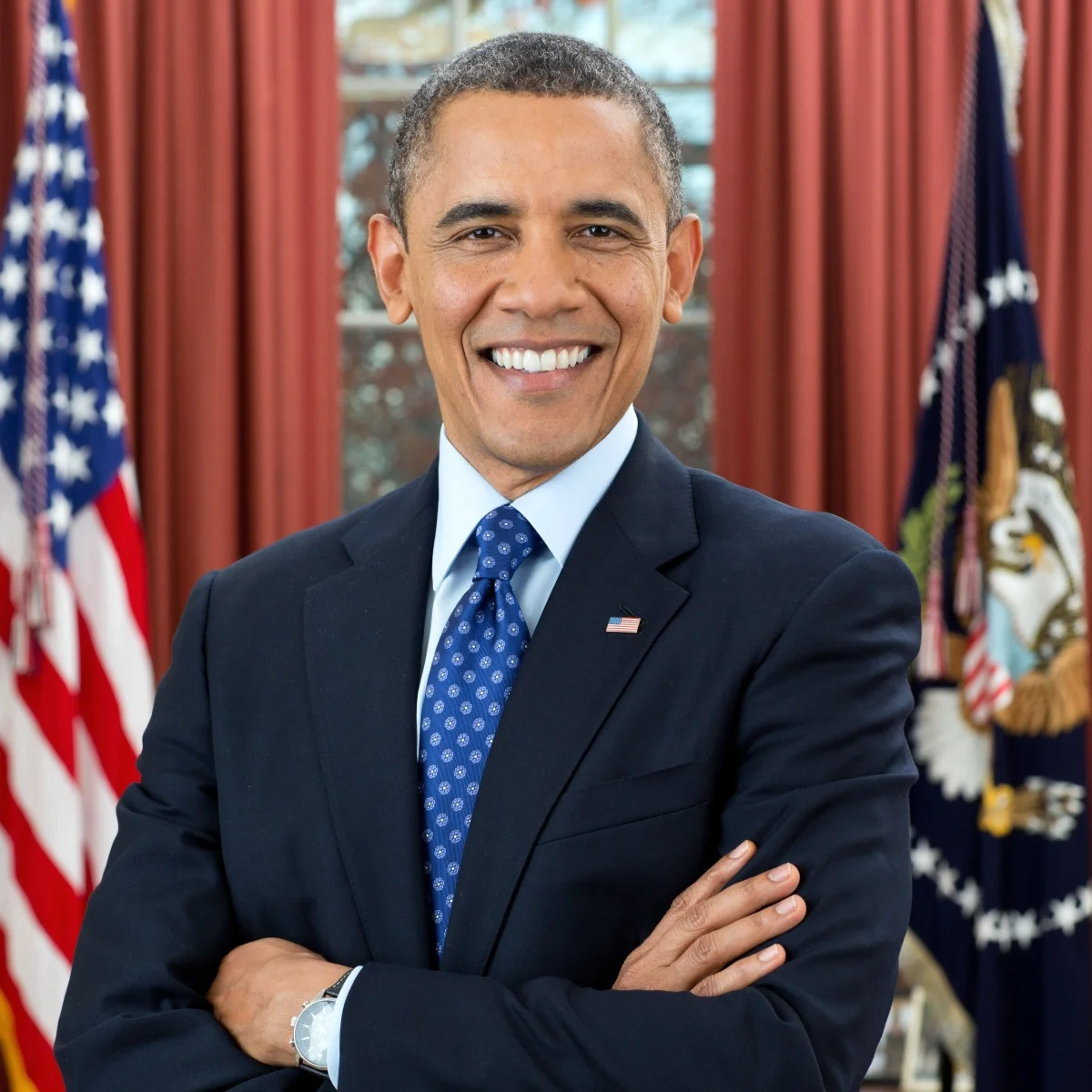
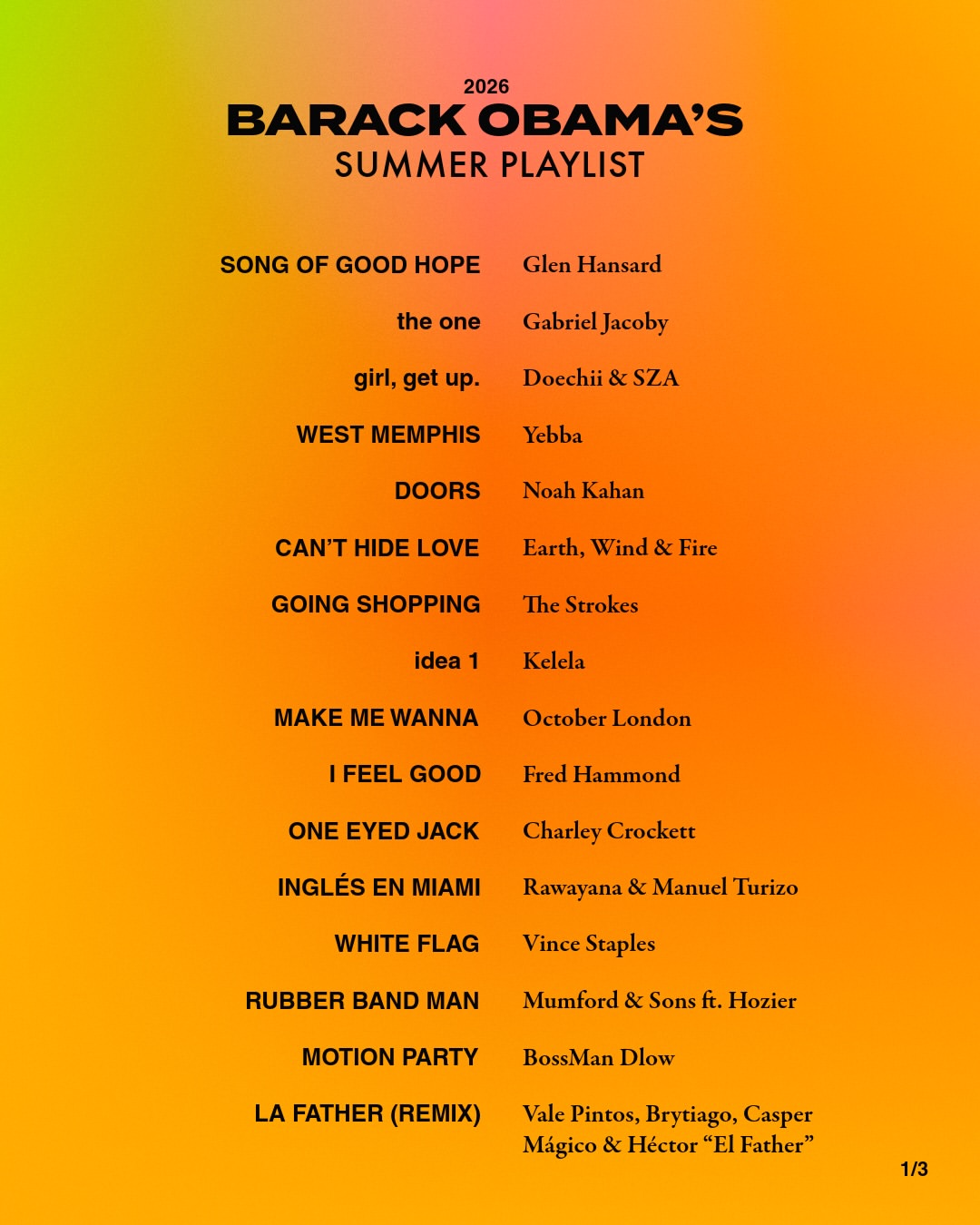
The playlist opens on a death. Barack Obama posted his songs of the summer on July 30, forty-one tracks deep, and the first thing he does is grieve. The list starts, he wrote, with a Glen Hansard song he and Michelle love, by "a great musician who passed tragically this week." The track is "Song of Good Hope," from Hansard's 2012 solo album, Rhythm and Repose. The Irish singer, an Oscar winner for "Falling Slowly" and the longtime frontman of The Frames, died the day before in a single-vehicle motorcycle crash outside Dublin. He was 56.
Sit with the sequencing. A grieving man puts the song he is grieving to at the top of a list that, forty tracks later, lands near BossMan Dlow's "Motion Party," a record built for a speaker in a parking lot. In between: Marvin Gaye, Nina Simone, a Doechii verse, a Fred Hammond praise break, RAYE asking where her husband is, and Sonny Rollins blowing through "Strode Rode." That is not a random list. This is a man showing us how his mind works.
 |
 |
 |
The one thing the machine will not do
No algorithm opens a summer playlist with a funeral. That instinct, the choice to lead with loss, is the entire case for human curation compressed into four seconds of a caption. A recommendation engine is a confirmation engine. It reads what you streamed last Tuesday and feeds you more of it, smoother and safer, until your taste is a sealed loop. Algorithmic playlists like Discover Weekly are excellent at exactly one job, which is guessing what you already want. They are structurally incapable of grief. Nothing in the code decides that a man died this week, and that the right response is to make a few million people sit inside an Irish folk song before anyone gets to dance.
He has done this every summer since 2015, and a decade on, Obama's summer playlist still stops the internet for an afternoon. The habit is of a piece with the rest of his output this month: a summer reading list the day before, and, weeks earlier, a concert for the opening of his Presidential Center in Chicago where he shared a stage with Springsteen, Stevie Wonder, and Bono. The through-line is taste asserted by a person, in public, on purpose. The list carries a point of view, and a point of view is the one thing the streaming machine cannot mass-produce.
Here is why the Hansard choice belongs at the top of a story on a hip-hop and R&B site like ours. Hansard was a busker before he was anything else, a kid playing for coins on the streets of Dublin. He spent decades leading a Christmas Eve busk outside the Gaiety Theatre for a homelessness charity, and at Shane MacGowan's funeral he tore through "Fairytale of New York" until the church was dancing in the aisles. His entire life was an argument that music is something you do together, in a room, for each other. That is the opposite of the solitary feed. Obama put it first on purpose.
Range is the argument
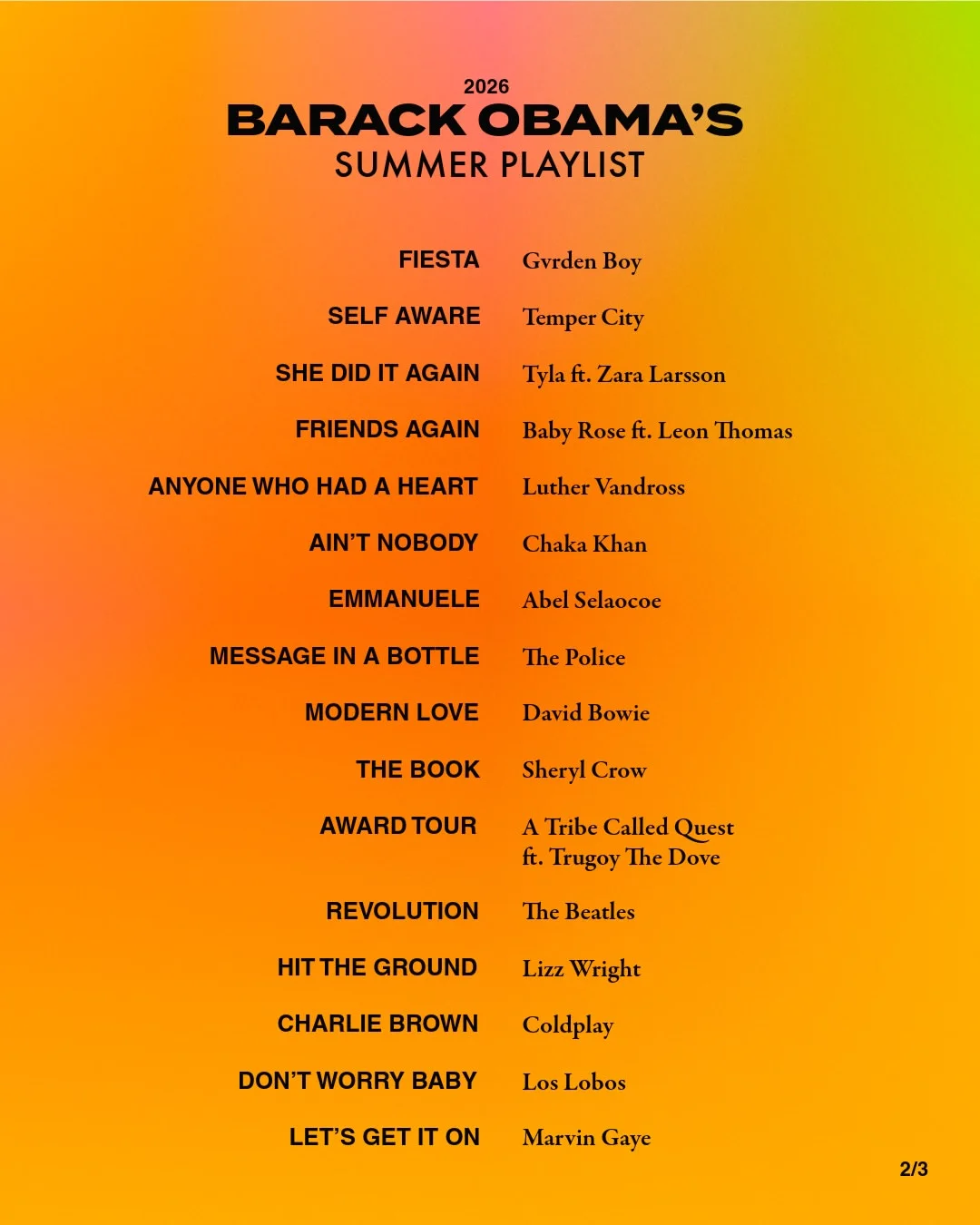
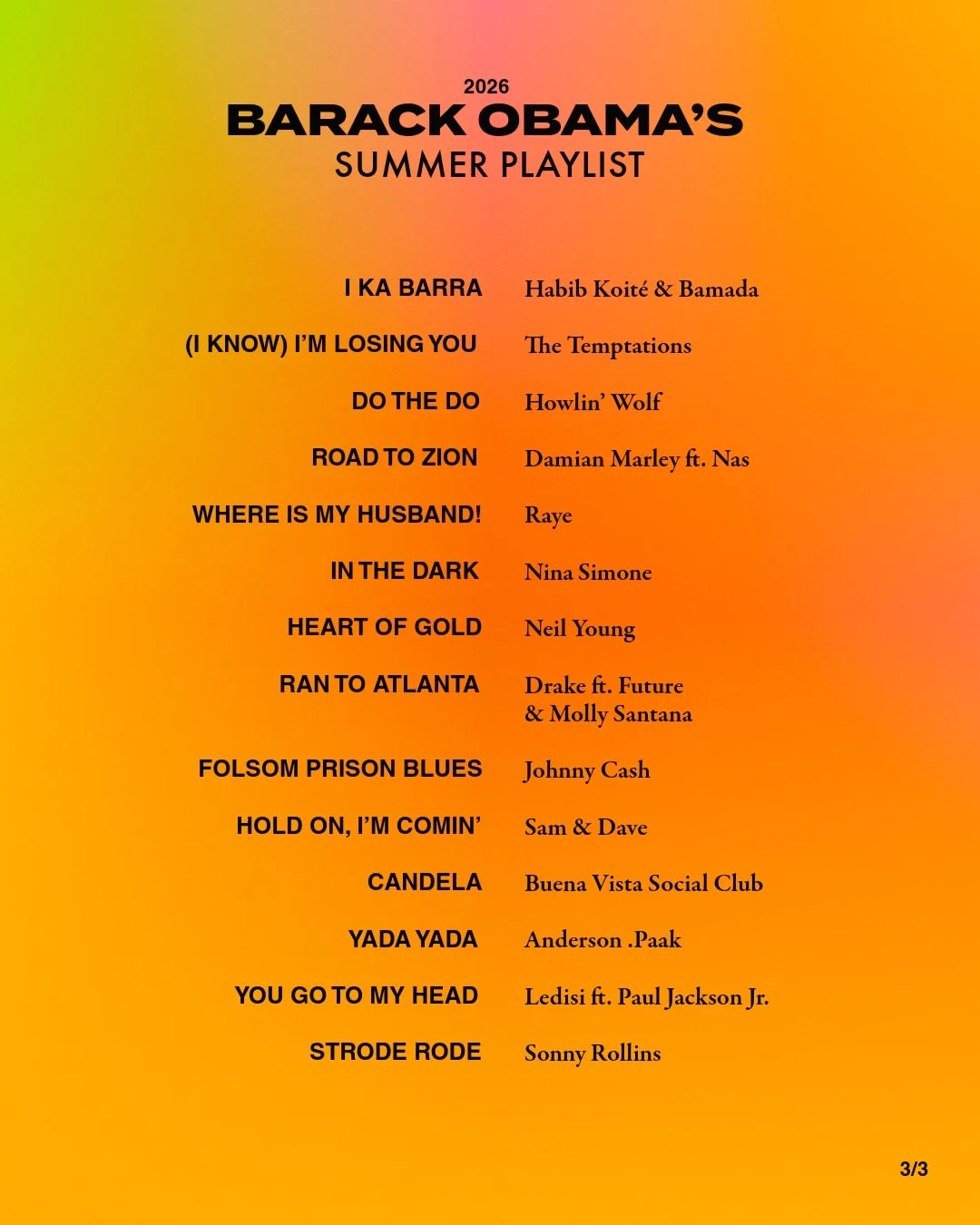
Look at what sits shoulder to shoulder. Doechii and SZA on "Girl, Get Up." Drake, Future, and Molly Santana on "Ran to Atlanta," a quieter pick than the Drake records that actually ran the summer, which reads like a person choosing on purpose rather than a chart choosing for him. October London doing his considerable best to sound like Marvin Gaye, two slots down from the real Marvin Gaye on "Let's Get It On." Chaka Khan. Luther Vandross. A Tribe Called Quest with Trugoy the Dove. Kelela's "idea 1," about as far from radio as R&B currently travels.
Now widen the lens. Buena Vista Social Club out of Havana. Habib Koite and Bamada out of Bamako. Abel Selaocoe, the South African cellist, on "Emmanuele." Damian Marley and Nas on "Road to Zion." A genre-siloed engine would never cross Mali, Cuba, Kingston, and Atlanta in a single sitting, because cross-pollination is not the thing it is built to reward. A person does it without thinking, because a person hears connections a database cannot see.
This is music discovery as an act of memory. The list treats hip-hop and R&B not as a content vertical but as a lineage, a decades-long argument still unfinished, where a viral rap record and a Sam and Dave song belong to the same family. The music has always worked this way. Its long memory is the reason a single hit can echo for a generation, the same pull that keeps fans tracking down R&B one-hit wonders decades after the radio moved on. Obama's sequencing just makes the bloodline legible in one scroll.
We also must add that this is not a nostalgia exercise dressed up as taste. The current end of the list is genuinely current. Tyla and Zara Larsson on "She Did It Again," a record that scraped the Hot 100 earlier this year. RAYE on "Where Is My Husband!" Baby Rose and Leon Thomas on "Friends Again." Vince Staples on "White Flag." These are not safe legacy picks. They are the choices of someone still listening forward, which is the part most people twice his age quietly stop doing. The machine never stops serving you the new. It just never knows which new thing is any good.
The co-sign still lands
Ask Noah Kahan. His "Doors" made the cut this year, ending a public campaign he has waged for years to get on the thing. His response when it happened ran four words: "I can finally rest." He is not entirely joking. A slot on this list is one of the last presidential co-sign moments a rising artist cannot buy, game, or botch. There is no submission portal. No distributor can pay for the placement the way a label pays for a playlist slot. You cannot pitch your way in.
So when Gabriel Jacoby, October London, Baby Rose, and BossMan Dlow turn up on the same list as The Beatles, something real happens to their week. Not a stream bump engineered by a rollout plan, but a choice made by a person with taste, pointed at more than forty million followers, that amounts to a single sentence: I heard this, and I picked it. "Babe, wake up," went one of the most-liked comments, "Obama just dropped his summer playlist." The joke lands because the event is real. In an economy where nearly all visibility is purchased, being chosen is a rarer word than it used to be, and worth more.
What a list is actually for
A playlist is a small and slightly embarrassing form of autobiography. It says here is what moved me this year, in this order, for reasons I will not fully explain, and it trusts you to feel the logic anyway. The systems that now mediate most of what we hear cannot make that kind of statement, because a statement requires a self, and a recommendation engine does not have one. It has a model of you. That is a different thing, and a lonelier one.
Obama closed the post the way he always does, by asking his followers to send him something new. A decade in, the most powerful curator in pop is still, before anything else, a fan. The Irish folk song goes at the front. The parking-lot anthem goes near the end. A grieving man decided that order. No machine we have built would have thought to try, and that gap, more than any one song on it, is what the list is really about.
Comments (0)
No comments yet — be the first to share your thoughts.
Leave a comment