

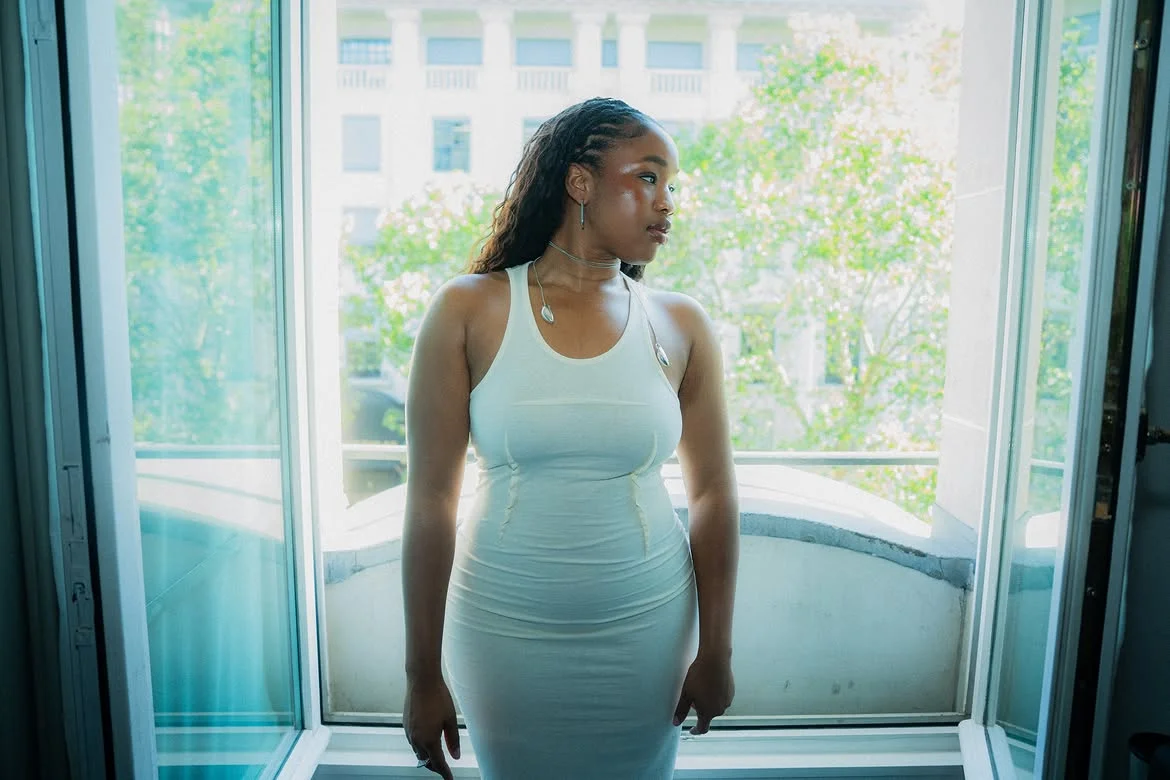
The first thing "More Of You" does is physical. Debbie enters low and close, almost conversational, and by the time the first chorus opens she has put something behind your sternum that arrives before your brain has processed a single lyric. The record runs three minutes and nineteen seconds. There is no guest verse, no beat switch built for a fifteen second clip, no one else in the room. A woman is singing about wanting more from someone who kept offering less, and the instrument carrying that thought is good enough to make an ordinary heartbreak feel like the only thing happening anywhere.
If you have not heard her, that is the whole pitch. Play it. Everything after this paragraph is context for a voice that does not require any.
The context is worth having anyway, because almost everything you are about to read this week about Debbie will get one thing wrong. She is not a newcomer. She is not an unsigned kid who got lucky on an app. The South London soul singer released her first single in 2021, sang on one of the biggest British albums of the decade, lost her record deal, buried her mother, and rebuilt an audience from her bedroom before a major label came back and asked for a second chance at her. "More Of You" is not a discovery. It is a receipt.
The voice
Start with the mechanics, because the mechanics are the story. Debbie grew up singing in a South London church, and you can hear the training in the places most singers leave empty. She does not decorate. There is a whole generation of rising R&B artist talent that treats vocal improvisation as proof of effort, filling every bar with runs because runs are what get clipped and reposted. Debbie mostly refuses. She sits on a note and lets it thicken. When she does move, it is usually one small bend at the end of a phrase, placed exactly where the emotional weight of the line is, and it does more damage than sixteen bars of gymnastics.
The tone itself is unusually dense. There is grain in it, a slight rasp that shows up under pressure and disappears when she pulls back, which gives her an enormous dynamic range inside a small volume range. She can go from a whisper to something crushing without ever really getting loud. That is rare, and it is the reason her records work at three in the morning on a phone speaker as well as they work in a room with real monitors.
What separates her from the rest of the current British R&B class is restraint under emotional load. The songs are frequently about grief, disappointment, and the specific exhaustion of being the person who cares more. A lesser vocalist would oversell that. Debbie underplays it, which is why it hits. The great soul vocalists have almost always understood this. Sam Cooke understood it. Aretha understood it. You hold something back so the listener has to lean in and meet you, and the leaning in is the point.
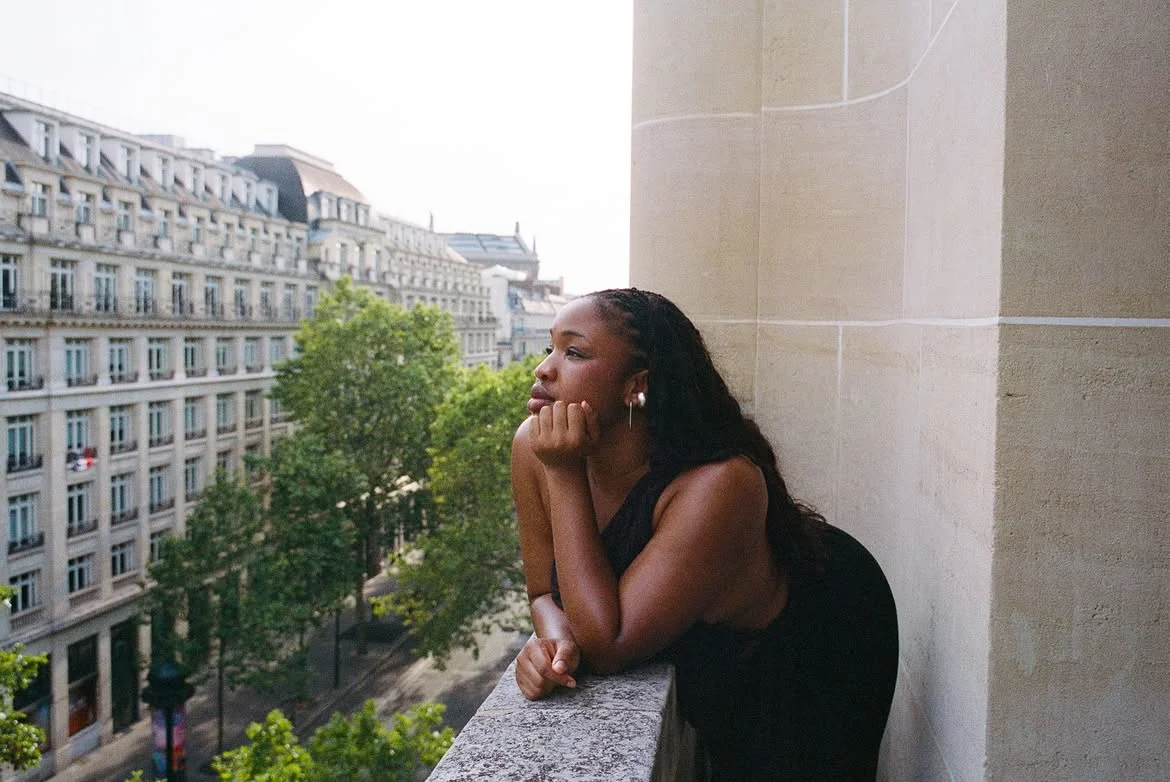
Five tracks on a number one album, and almost nobody knew her name
In 2022, Stormzy released This Is What I Mean, and Debbie sang across five of its tracks, including "Firebabe." The album went to number one in the UK. Her voice was on a significant portion of it, and if you asked the average listener who the woman singing was, most could not have told you.
This is the oldest arrangement in the business. A singer with an unmistakable instrument becomes the texture on somebody else's statement piece, gets a credit line, gets a career bump that never quite converts into her own audience. Her actual debut, "Is This Real Love?", had arrived in 2021 through 0207 Def Jam, produced by PRGRSHN, and it was strong enough that Lucky Daye showed up for the remix in early 2023. She recorded with Berwyn. She recorded with Nines. The industry knew exactly what she was.
And then the label situation ended, which is what usually happens to artists the industry knows exactly what to do with but never quite gets around to doing it.
Debbie has been unusually direct about that stretch. Talking to Clash earlier this year, she said that after she and the label parted ways she felt "pretty numb and honestly unsure of what I was doing." That is a more honest sentence than most artists will give you about being dropped, and it sits at the center of everything that followed.
During that period she went into the studio with her longtime collaborator Hannah V with no particular plan, and the two of them found old demos they had forgotten recording. One of them was a song called "The Rain Isn't Over." Debbie realized, going through the files, that they had cut it days after her mother died. She had written her way through the worst thing that had ever happened to her and then lost the file.
She released it in January 2026 through her own imprint. It is one of the most exposed pieces of music you will hear this year, and it closes on a note of self-acknowledgment rather than resolution, which is the correct and much harder choice. The phrase she kept returning to around it, the one that eventually became a philosophy and then an album title, is that whatever is happening to you is "just a minor tear." It will pass. Everything does.
Ninety days
Here is the part that should interest anyone who cares about how careers get built now. With no label and no marketing budget, Debbie set herself a ninety day creativity challenge and started posting material on her own socials. Unreleased demos. Voice memos. Whatever she had. She was not running a campaign. She was keeping herself in motion.
The audience came back on its own. By the time "The Rain Isn't Over" actually reached streaming services it had already pulled more than two million views across TikTok and Instagram, with hundreds of thousands of comments and likes, and co-signs from Jamie Foxx, Timbaland, and Kim Kardashian. None of that was bought. A woman posted a song she had recorded in the worst week of her life, and enough people stopped scrolling that the industry noticed.
What followed was a run: "Weight On Me," a COLORS session, "House of Cards" with Victor Ray in April. Then a new deal with Warner Records, with her debut album A Minor Tear on the way. She had originally planned an EP but she had too much music.
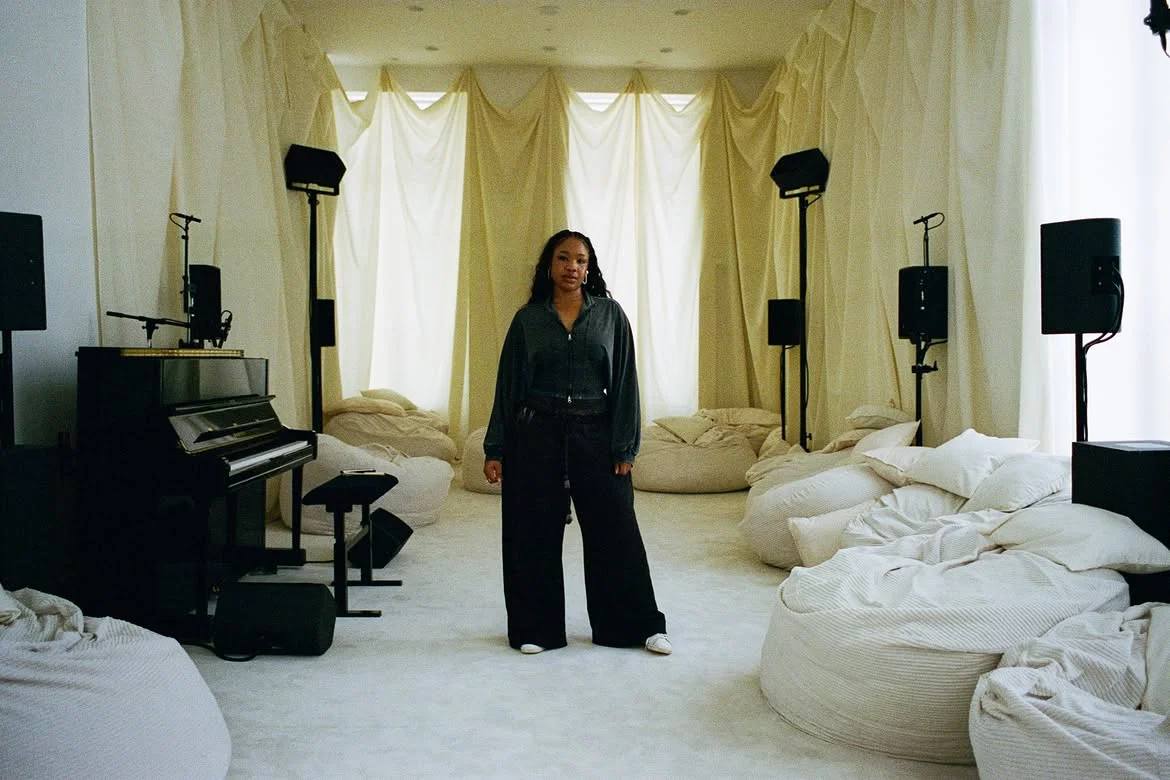
"More Of You" and the thing she got right
Which brings us to today. "More Of You" arrived on streaming platforms on July 31 with roughly half a million TikTok views already banked, and Debbie has said it was one of several songs she wrote about the same ex. Her framing of it, given to Official Charts, is that she had spent years accepting "breadcrumb versions of love" and had forgotten what standards looked like.
That is a fairly common subject for new soul music, and it is worth saying plainly that the song is not reinventing anything structurally. What makes it excellent is that Debbie sings the uncertainty rather than the conclusion. The record does not sound like a woman who has already left. It sounds like a woman talking herself into believing she deserves better while she is still standing in the doorway, and the voice keeps betraying how much she wants to be talked out of it. That is much harder to perform than triumph. Most singers reach for the empowerment read because it is cleaner. She stays in the mess.
Three minutes, nineteen seconds, and she never once oversings it.
The order changed
Now the part that matters beyond one record. The traditional pipeline ran in one direction: a label signs you, radio and playlists carry you, and an audience assembles at the end. Debbie ran it backwards. She lost the institutional backing first, built the audience second, and the Warner Records deal arrived third, as a response rather than a bet. "More Of You" is credited as a Warner release under exclusive licence from her own company. She did not hand over the keys. She rented out the distribution.
That distinction is going to define the next decade of this business, and it is why the lazy version of this story bothers us. You will see people frame Debbie as an algorithmic success, a TikTok discovery, proof that the platforms democratised everything. That reading has it backwards. No algorithm found her. People did. They found her because she is one of the best singers in the country and because she kept putting the evidence in front of them for ninety days straight until the weight of it became undeniable. The platform was a delivery mechanism. The judgment was human, which is the same argument we made about Ogi and the repost that started her career, and the same one that runs under every crowded release week where curation is the only way out.
The machines are not bad at their job. They are just downstream of ours. Every recommendation engine on earth is trained on what people already decided to care about, which means human curation is not the alternative to the algorithm. It is the input. Somebody has to hear a voice and say out loud that it is worth your time before any system can learn to repeat it.
So we are saying it. Debbie has one of the best voices working in soul music right now, on either side of the Atlantic, and the fact that it took a label losing her and finding her again to get most people to notice is an indictment of the process, not of the singer.
Where to start
Give "More Of You" the first four minutes. Then go straight to "The Rain Isn't Over," which is the emotional core of everything she is building and the record that explains the rest. "House of Cards" with Victor Ray shows what she sounds like in dialogue, trading lines rather than carrying a song alone. If you want the origin point, "Is This Real Love?" still holds up five years on, and the Lucky Daye remix is a useful demonstration of how comfortably she stands next to an American star with a Grammy on the shelf.
Then go back to This Is What I Mean and listen to "Firebabe" knowing whose voice that is. It plays completely differently once you have a name attached.
A Minor Tear is coming. Get in before the room fills up.
Comments (0)
No comments yet — be the first to share your thoughts.
Leave a comment