

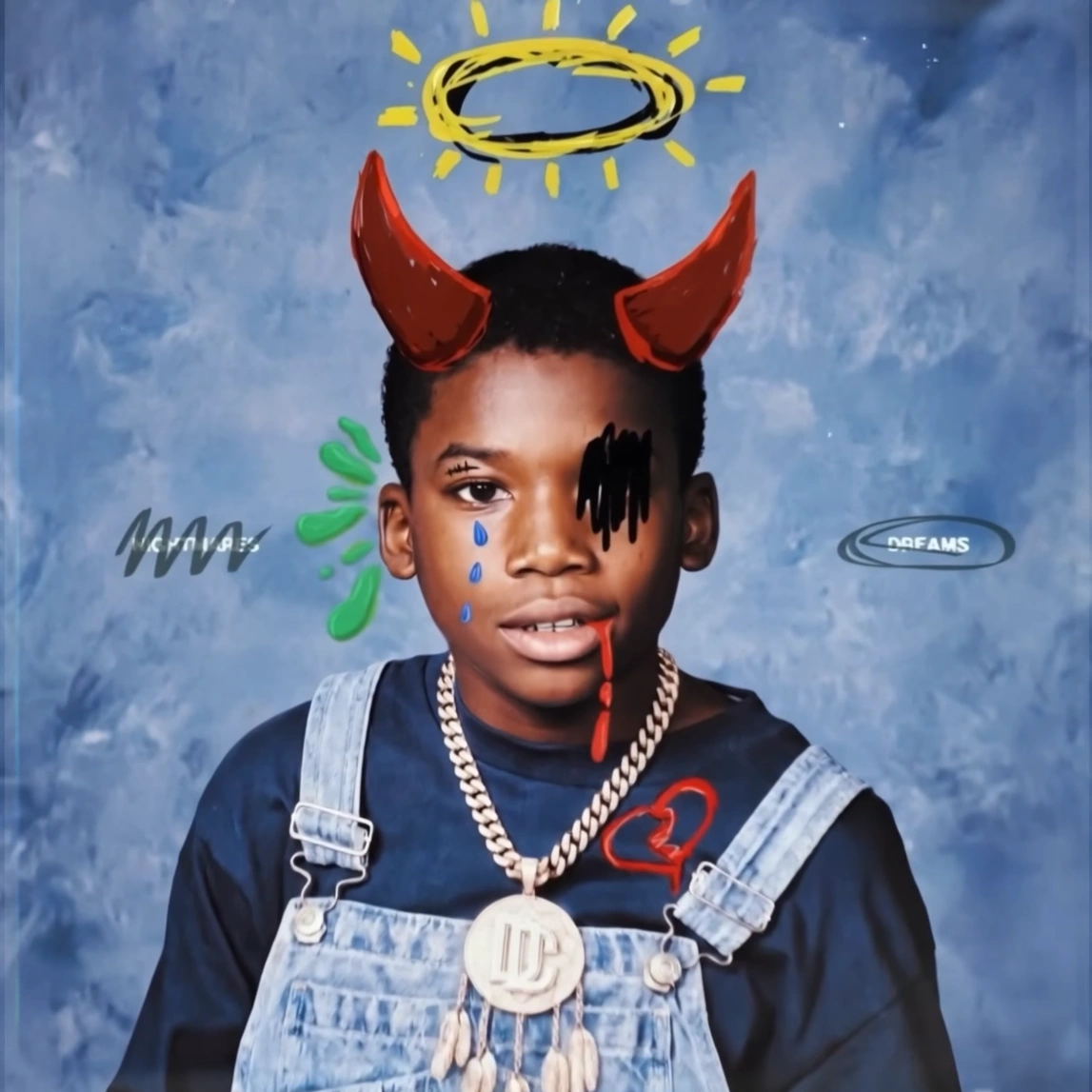
On May 26, Nike put out a LeBron James signature shoe called the "Dreams and Nightmares," a metallic gold and silver LeBron 23 tied to his first championship in Miami, priced at $235. The product copy framed it around LeBron's years of being called ringless. It did not mention Meek Mill. The tour-style tee that dropped alongside the sneaker used a split-face lion image that looked a great deal like the cover of his Dreamchasers 3 mixtape.
Meek found out the way everyone else did. "So @nike just gone take my whole brand and mash it up with LeBron," he wrote on X, adding that he had assumed the shoes were fake.
Eight days before that post, on May 18, Dream Chaser Records had filed a trademark application for the phrase. Fourteen years after the song came out. That timing was almost certainly too late to be useful against Nike, and a phrase that plain is hard to own in the first place.
Sixty-six days later he released the sequel.
The Short Q&A: Is It Worth Your Time?
Yes, with a caveat that has nothing to do with whether he can still rap.
"Nightmares To Dreams" arrived July 31, produced by LOR, Different Money and DeloMixedThis, out independently through his Dream Chasers imprint. It is gritty, punchy, flow-heavy, unmistakably Meek, and it is not going to become what the first one became. The reason is structural rather than lyrical, and it is more interesting than the usual complaint that sequels never measure up.
Here is HitsCulture's read. This is not a nostalgia grab and it is not a lap around the trophy case. It is a man trying to take something back.
The Original Was an Argument About Sequence
"Dreams and Nightmares" opened Meek's debut album on October 30, 2012, produced by Tone the Beat Bully, three minutes and twenty-six seconds long, recorded at the Ocean Sky Hotel in Miami during the last sessions before the deadline. No hook, no feature, no chorus anybody could sing.
What made it work was the order of events. Meek rapped his first section over patient piano, then asked for the beat to change, and wrote the rest once Tone gave him something to be angry at. The listener gets almost two full minutes of restraint before the floor drops. That beat switch is not just about the production progessing. It is the whole argument of the song, the sound of a man who has been waiting and deciding he is finished waiting.
The RIAA certified it double platinum. It topped Billboard's Bubbling Under R&B/Hip-Hop Singles chart, which is a strange, telling stat: the biggest song of his career was never technically a hit.
Then Philadelphia Took It
The song's second act belongs to the city, not the artist. It got played at cookouts and weddings and homecomings until it stopped being a track and started being a cue. Then the Eagles adopted it during their 2017 season, walked out to it at Super Bowl LII, beat New England 41 to 33, and won the franchise's first title while Meek was incarcerated and could not watch his own coronation in person.
The morning after that game, according to Billboard, the record pulled 1.47 million streams in a single day. Fourteen years on, it is less a Philadelphia rap anthem than a piece of municipal property, and Meek has said out loud that he considers it one of the best songs ever made. He is not entirely wrong, and he is also not the only person with a claim on it anymore.
That is the thing about writing something that big. It leaves. LeBron used it to narrate his own career for years before Nike ever printed it on a box. Every gym in America has borrowed the opening line. And when a corporation finally attached the phrase to a different man's championship story, the person who wrote it had no paperwork and no phone call, just a post at three in the afternoon asking why nobody hollered at him.
What the Sequel Actually Does
This is where the record gets genuinely interesting, and where most of the coverage has been sloppy.
"Nightmares To Dreams" is not a new beat. It is built on the original's melody, and it inverts the structure. Complex described the flip accurately: the menacing half comes first this time. The nightmare opens the record. The dream is the destination.
As a statement of theme, that is exactly right and it is the only honest way to write this song at forty. He is not chasing anymore. He came up out of it. Reversing the title without reversing the architecture would have been reckless.
But it costs him the thing that made the first one blow up. You cannot build suspense toward a place you started. The original earned its explosion by making a room wait together, and a crowd that has already been handed the loud part has nothing left to anticipate. Meek attacks the track hard, ad-libs stacked on ad-libs, that clipped acceleration nobody else quite has. The performance is not the problem. The problem is that a great payoff requires a setup, and he traded the setup for the theme.
It is a justifiable trade.
What People Are Actually Saying
The response split along a line that has followed Meek for years, and it has almost nothing to do with the music. On X, fans called him one of the greatest of his generation and kept circling the same idea: his behavior online makes people forget how good he is on record. HotNewHipHop collected a run of them and the sentiment was consistent enough to be its own genre of compliment. Praise with a caveat attached.
The skeptics landed somewhere quieter. Not that the bars are weak, because they are not, but that inviting the comparison at all was a strategic mistake, and that a song this good would have played better without the title daring you to rank it.
Both camps are describing the same problem from opposite sides. A new hip-hop sequel to a song that has been playing at Super Bowls for eight years does not get graded on its own terms. It gets graded against a memory, and memory does not lose.
The Business Story Underneath the Song
Track the release history and the sequel looks less like nostalgia and more like a campaign.
Meek put out the Indie Pack Vol. 1 EP in November 2025. He returned on April 3 with "600 Racks," also produced by LOR, released through DreamChasers and distributed by Stem, which means the money moves through infrastructure he owns. In between came the Nike episode and the trademark filing. Now the sequel, same imprint, same setup.
His last studio album, Expensive Pain, came out in 2021. Five years is a long time for a rapper who built his name on volume, and the independent release strategy he is running now is a bet that ownership is worth more than a major label's marketing budget at this stage of a career. Given that he just watched Nike monetize his most famous four words without a courtesy call, the gamble reads more like a man who has learned something expensive.
That is the story here. Not whether a sequel can match a classic, which it cannot and never was going to. Whether a forty-year-old rapper can convert the thing he made into something he still controls.
The HitsCulture Verdict
Seven out of ten as a Meek Mill record. He sounds locked in, the flows are sharp, and anyone who has quietly written him off as a meme with a catalog should sit with it for three minutes and reconsider.
Five and a half out of ten as a sequel, and the gap between those two numbers is not a knock on his rapping. It is a structural verdict. He inverted the one thing that made the original a monument, and he did it for reasons that make sense on paper and cost him on playback.
His rap legacy does not move either direction on this. The original left his custody a long time ago, which is precisely what he has spent 2026 discovering, in a sneaker store and a trademark office and now on a record. The sequel is not a monument. It is a receipt.
Whether it turns into an album is the only question that matters now, and that answer is not due for a while.
Comments (0)
No comments yet — be the first to share your thoughts.
Leave a comment