

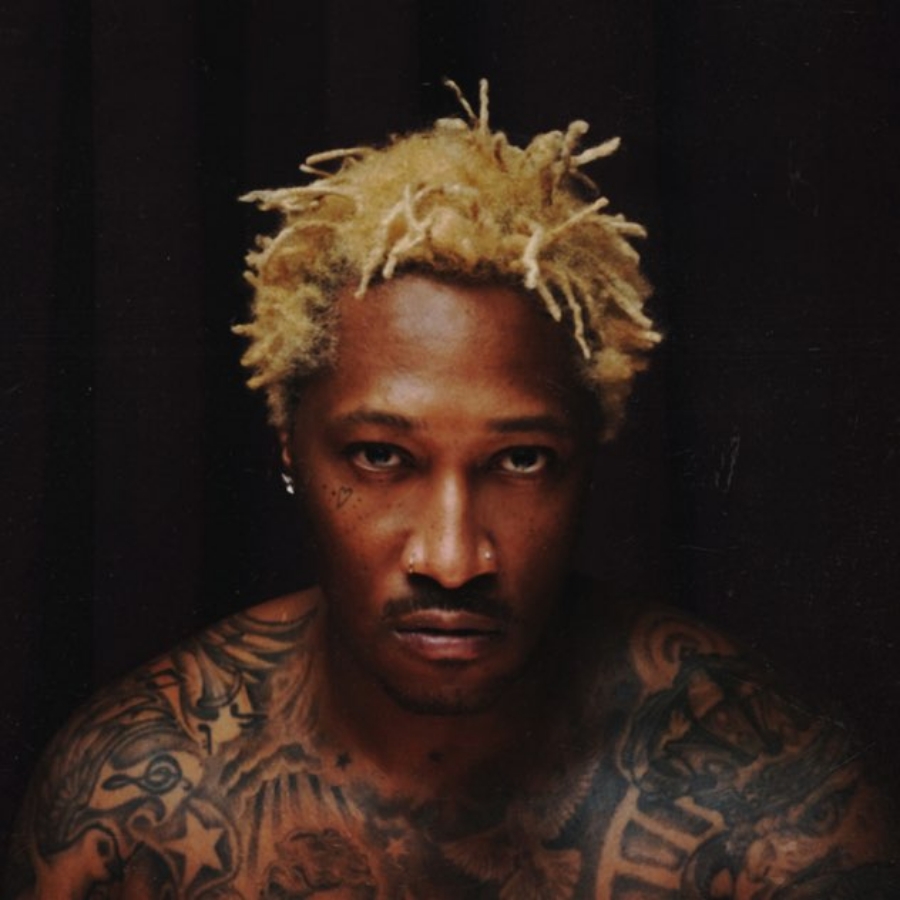
There is a track on The Real Me called "Fukk a Interview." Future put it near the front of an album named after honesty, and it tells you more or less where the honesty is going to stop. Read it as a taunt. Two decades into a career, most rappers his age are curating a legacy, sanding down the edges, sitting for the documentary. Future is still refusing to answer the question his own title asks.
The Real Me arrived on July 10, 2026, twenty-two tracks and fifty-eight minutes, with no guest features anywhere on it. It is Future's tenth studio album and his first solo studio record in four years, since I Never Liked You in 2022. Mixtape Pluto covered the gap in 2024, and the two Metro Boomin albums before it kept him at the center of the culture. The title promises the man under the auto-tune. Anyone who has followed him since the Pluto mixtapes knows to hold that promise loosely.
The record is a master technician circling a subject he will not name out loud, over production that sounds expensive and stays up past 3 a.m. The melodies land harder than almost anything on Mixtape Pluto. The confession the title advertises never fully arrives. You can hear that as a failure. We hear it as the design.
Streaming platforms love Future because he is clean fuel for a playlist. Drop him next to three sound-alikes, let autoplay run, and the numbers behave. What the machine cannot log is the thing that made him matter in the first place, the mood and the contradiction, the way a single ad-lib can carry more grief than a full sixteen from somebody else. His catalog is built on melodic trap production that reads flat as data and hits deep as feeling.
This is the gap human-led curation exists to close. A person who has lived with the catalog can hear that this album is one of his most controlled, that the restraint is deliberate, that the missing radio grenade is itself the statement. Point a recommendation engine at it and you get a trap tag and a skip. We spent a stacked July making this exact case, that in a month when everybody dropped at once, the only way through the noise was a human ear.
2012's Pluto introduced a melodic sound the mainstream had no slot for. DS2 in 2015 turned personal wreckage into a stadium-sized sound. HNDRXX in 2017 was his first real swing at open-hearted R&B, proof he could sing about love without dropping his armor. The 2024 run, from WE DON'T TRUST YOU with Metro Boomin through Mixtape Pluto, showed he could still command a full cultural cycle whenever he felt like it.
That lineage comes out of a specific place. Atlanta rap spent two decades exporting the template the rest of the industry now runs on, and Future sits close to the center of it, the man who took regional slang and local pain and turned them into a national dialect. The producers here carry that DNA. Southside and ATL Jacob built beats under him, and Pharrell turns up in the credits too, a reminder of how far the sound has traveled from the basement it started in.
The rollout tells you who he is talking to
Watch how it came out. No year-long tease, no cryptic billboard campaign. Future announced the album on June 25 and dropped it two weeks later, a hip-hop album rollout compressed nearly to the point of rudeness. A title that dares you to expect vulnerability, then a body of work that keeps its own counsel. In the current streaming-era, where the rollout is often a bigger production than the songs, that kind of speed reads as its own flex.
Plenty of rap veterans hit this stage and start chasing whoever is fifteen years younger. Future did the opposite. He made a record that trusts the audience to come to him. Whether the market rewards that patience is a live question in 2026, when discovery is outsourced to a feed and the acts who win are the ones easiest to sort. A veteran with a complicated album is exactly the release that slips through the cracks, praised by the numbers for the wrong reasons or ignored for being hard to file. Our reporting on hip-hop's shrinking streaming share gets at the same worry from the business side, a genre still on top and quietly watching its superstar pipeline thin out.
Is this a reinvention
Not the way the marketing wants you to think. The real artistic reinvention here is subtraction. Fewer stunts, tighter writing, a willingness to sit inside one emotional register instead of sprinting to the next hook. For an artist whose whole brand was excess, doing less is the boldest thing on the menu. The no-features decision is part of it. Twenty-two tracks and nobody to hide behind, no marquee verse to carry a soft stretch. That is a strange kind of exposure for a man who will not say the vulnerable thing out loud.
Does every track earn its place? No. The back third sags, and a leaner cut would have sharpened the whole argument. But the peaks are among the most assured work of his late period. It helps to remember what he has survived, counted out after nearly every high, written off as a fad, then proven durable once the imitators thinned. Slow records age differently than loud ones. The growers now are often the songs people still reach for years from here, long after the summer anthems get quietly retired.
If you want the Future who blows the roof off a club, this is not that album, and you may bounce off it on first listen. If you want the one who has always used melody as a mask for the thing he cannot say straight, it is a rich, rewarding chapter. We are not here to hand you a star rating. This is fan-first music coverage, which means telling you what the record is trying to do so you can decide whether to meet it there. Future named the album The Real Me and then declined to show it. On this record, the withholding is the honesty.
Comments (0)
No comments yet — be the first to share your thoughts.
Leave a comment