

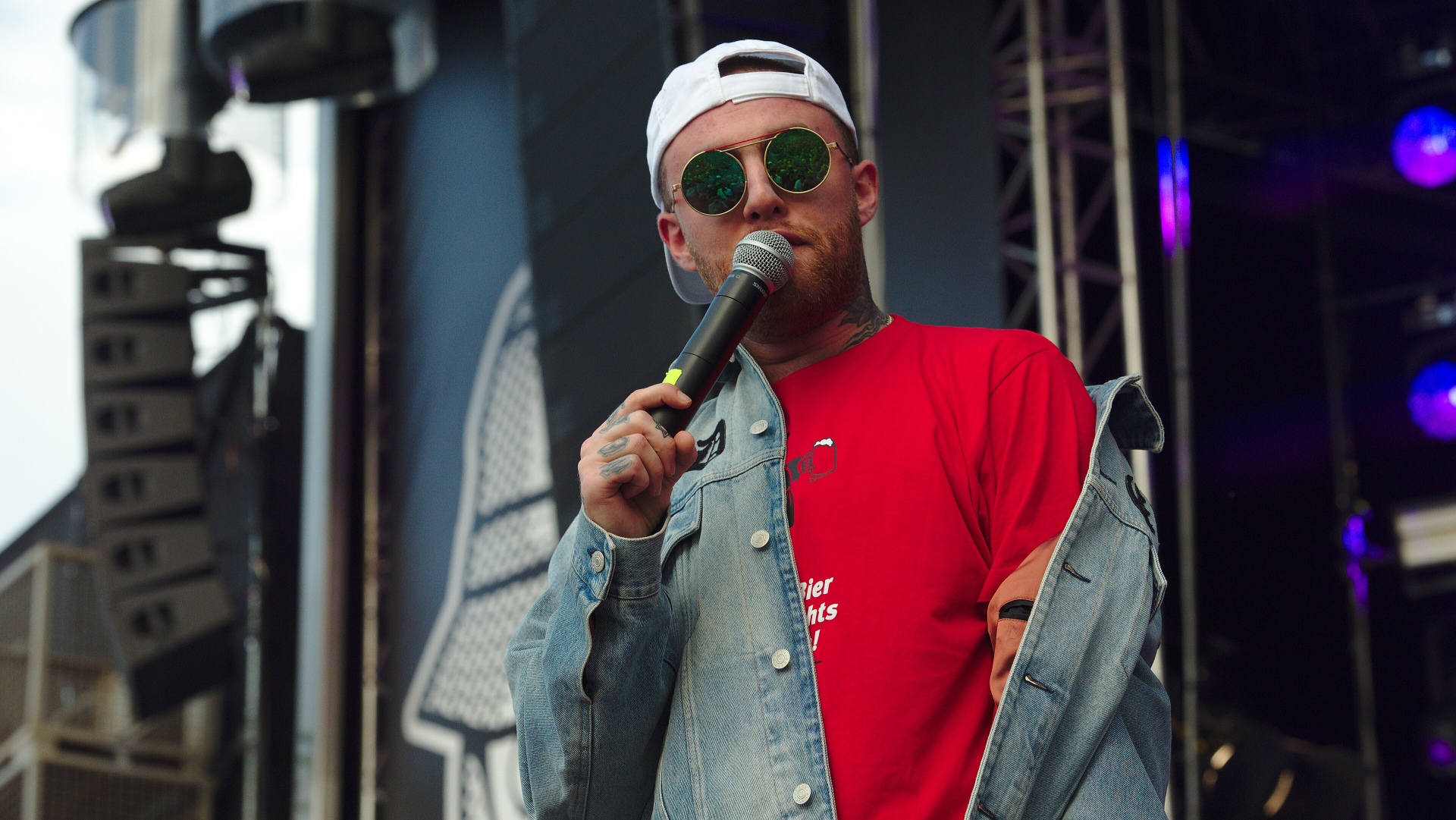
The Divine Feminine marks its 10th anniversary on Wednesday, Sept. 16, and the numbers surrounding Mac Miller’s fourth studio album have changed dramatically since its release. Issued through REMember Music and Warner Bros. Records, the album initially delivered the smallest opening week of Miller’s career. It has since earned platinum certification, and Warner Records will expand the album on Oct. 2 with three previously unreleased songs from the original recording sessions.
The Divine Feminine features 10 tracks across 52 minutes, opening with Bilal and closing with Kendrick Lamar. Across the album, Miller emphasizes singing and melodic wordplay over the rapid-fire rapping that defined much of his early work. At 24, and five years into a career built on speed and volume, he used the project to slow down, explore jazz and soul textures, and let the arrangements breathe. At the time, many listeners viewed the shift as a detour.
In an August announcement, Miller’s estate described the album as "an audacious pivot" after GO:OD AM. The reissue credits offer a broader interpretation. They show that several musicians who later helped shape Miller’s subsequent releases, including both posthumous albums, were already collaborating with him during the The Divine Feminine sessions in 2015 and 2016.
The guest list
Bilal opens the album on "Congratulations," carrying the hook over live keys before Miller takes a verse. Anderson .Paak has the back half of "Dang!," the five-minute lead single that Pomo built on a bouncy, loping bassline. CeeLo Green handles "We," produced by Frank Dukes. Ty Dolla $ign sits on "Cinderella," Njomza on "Planet God Damn," and Ariana Grande on "My Favorite Part," which arrived as the third single a week before the album did.
The production roster ran deep for a record this intimate. Frank Dukes, DJ Dahi, Pomo, Dâm-Funk, ID Labs, Vinylz, Tae Beast, JMSN, Aja Grant and Tyrone "MusicManTy" Johnson all took a turn on it. The sessions ran out of Jungle City and Blast Off in New York, EastWest in Hollywood and Encore in Burbank. Very little of it sounds like a beat with a rapper placed on top. It sounds like players in a room, listening to each other. Miller had first sketched the project as an EP, then expanded it to a full album so he could push further into territory he had spent five years rapping around.
The clearest account of how Miller got there involves a phone call. He told Rolling Stone that fall that Kendrick Lamar had asked him on the phone why he did not sing more. The call landed roughly two days before the two met up to record "God Is Fair, Sexy Nasty," with the album already finished. Miller described singing on record as unfamiliar and exposed, closer to standing there with nothing on: "It feels like being naked, a little bit."
What the market said in 2016
The Divine Feminine entered the Billboard 200 at No. 2 behind Drake's Views, moving 48,000 equivalent units with 32,000 of those coming from traditional sales. That made four consecutive top-five albums, and it was the weakest opening of the four by a wide margin. Blue Slide Park had debuted at No. 1 in 2011 with 145,000 copies, Watching Movies with the Sound Off did 102,000 in 2013, and GO:OD AM did 87,000 the year before.
When Swimming went platinum in February 2021, The Divine Feminine was the only album in Miller's studio discography carrying no RIAA certification at all. It finally moved in December 2024, when the RIAA issued 26 new certifications across his catalog and pushed The Divine Feminine, GO:OD AM and Circles to platinum. Eight years after release, the love album crossed a million.
Miller announced a 43-date North American run on August 24, 2016, opened it in Pittsburgh two days after the album arrived, and closed it in Baltimore on December 18. He also played the record in full for an Audience Network concert special that aired September 30, with Grande and CeeLo Green turning up as guests. For an album the industry had quietly written off as a soft sales quarter, it got the promotional treatment of a priority release.
The sessions ran deeper than the tracklist
"Butterflies," the first of the three additions and the only one the estate has named, was produced by Taylor Graves and features Thundercat on bass. Thundercat appears nowhere on the 2016 tracklist, and the song comes from those same sessions.
Miller had already explained what that room sounded like. In the same Rolling Stone conversation, he described jamming with Thundercat constantly and piling up recordings he doubted would ever be released. He also put watching Thundercat play bass among the best things music had given him. Two years later Thundercat sang and played on "What's the Use?" on Swimming. Taylor Graves and Thundercat both surface in the credits for Balloonerism, the posthumous album Warner released in January 2025. In February, Thundercat put out "She Knows Too Much" with a Miller vocal on it.
The soul and jazz players Miller met making this album stayed for the rest of the discography, and for the part of it he never heard finished. Which leaves the question every archive release has to answer eventually, the one about who decides what leaves the vault and when. It is the question Busta Rhymes has been working through in public with J Dilla's unreleased production, and the one Miller's estate has been answering since it began approving posthumous releases in 2019.
What October 2 is actually for
The 10th anniversary edition carries thirteen tracks: the original ten, "Butterflies," and two the estate has not identified. It arrives digitally and on vinyl in deluxe and standard three-LP configurations, with pre-orders already live. The estate also launched an interactive Mac Miller website built out of archival material donated by friends and collaborators.
Anniversary reissues in 2026 function as arguments about catalog order more than as product launches. Mariah Carey spent this summer making that case for Glitter, pulling the album off streaming in January and reopening it with a new remix in August ahead of an October 30 reissue. Warner is running a quieter version of the same play here, with no removal and no scarcity stunt, just a longer tracklist and a website.
Miller died in September 2018 at 26.

Comments (0)
No comments yet — be the first to share your thoughts.
Leave a comment