

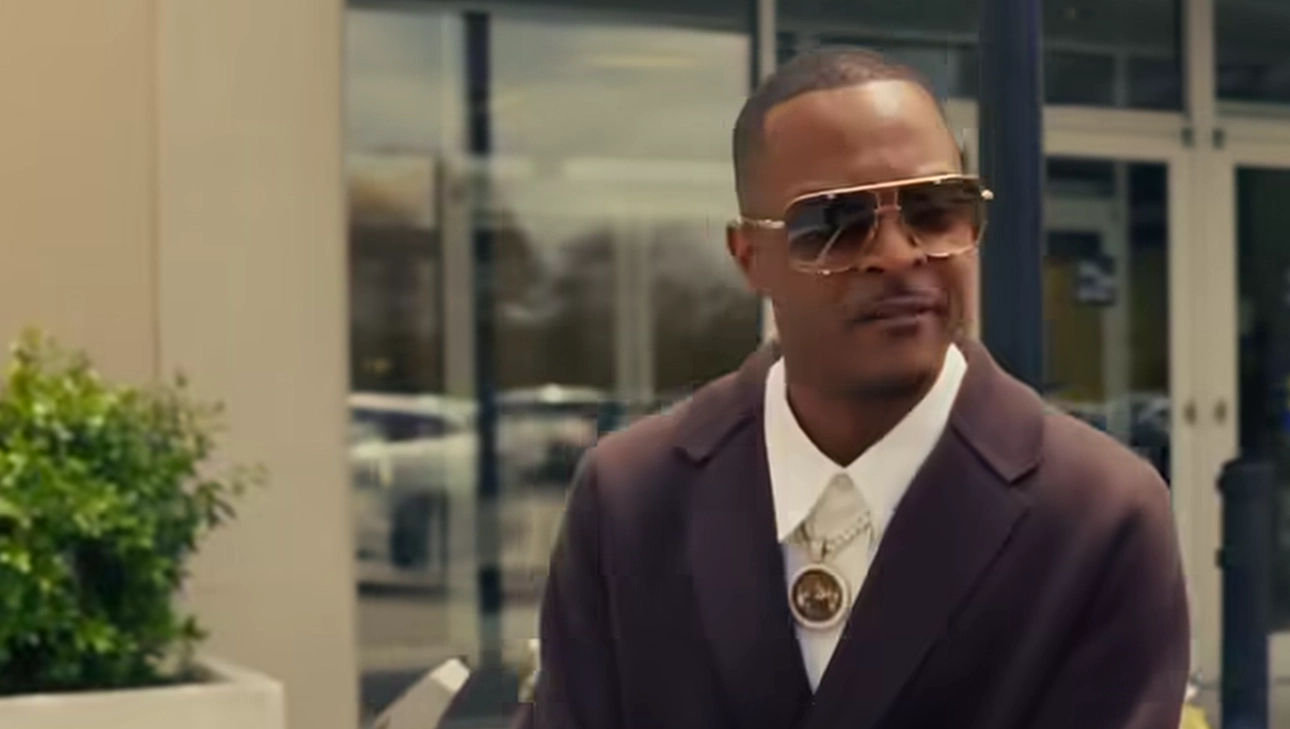
A Newark company that licenses images and video to AI developers added a new name to its investor page on Tuesday (Sept 15). T.I. is listed there as "Rapper, Actor, Investor," joining a roster that already included tennis pro Frances Tiafoe and NFL veterans Deion Jones and Jalen Mills.
The company is pocstock, and what it sells is the material artificial intelligence gets trained on. It licenses what it calls "culturally intelligent, rights-cleared datasets" of photography, video and illustration to technology companies building models. As of June 30, it reported more than 10 million library assets, 1,300 customers and 3,000 contributors, and terms of T.I.'s investment weren't disclosed.
The deal puts T.I. on the licensing side of AI, where the rights to a picture are cleared before a model ever sees it. He arrives there after years in federal court fighting a toymaker over his wife's girl group. Most of the music business has handled the same technology in reverse, suing first and then negotiating a price for training that had already happened.
"Authenticity cannot be faked, and our stories cannot be told properly without us in the driver's seat," T.I. said in the announcement. "Pocstock is capturing the positive aspects of our culture. I am incredibly proud to support a team that is purposefully changing the visual landscape and showing the world exactly who we are."
Steve Jones, who co-founded pocstock with DeSean Brown and runs it as CEO, framed the company around a single question of who AI learns from. "Our goal is to help build a more responsible and representative data layer for AI while bringing creator communities along as the technology evolves," Jones said. Later in the statement he added, "If AI is going to accurately represent us, it should learn about us directly from us."
The company runs a stock library of photos, video and illustration that buyers can search by ethnicity and cultural context. Its homepage, though, leads with prebuilt training datasets "annotated with culture forward metadata" and custom collections that include motion capture and behavioral data. It also advertises studio research documenting skin tones on the Monk scale under shifting light. It says it can produce content in more than 65 countries, and it names Adobe, Google, Meta, Microsoft and Shutterstock among the brands it lists as trusted.
The investor page puts pocstock's outside funding at just over $1.79 million across three seed rounds through September 2024, the largest of them $925,000. Backers who came in before T.I. include 9.58 Venture Partners and marketing executive Kofi Amoo-Gottfried.
As HitsCulture laid out in its August breakdown of who actually gets paid from AI music licensing, the RIAA sued Suno and Udio on behalf of Sony, Universal and Warner in June 2024. Universal settled with Udio in October 2025, and Warner settled with both companies the following month. On August 12, BMG announced a global alliance with Suno that licenses future use while resolving past unlicensed training.
Those settlement dollars land first with labels, publishers and distributors, and they travel to artists through contracts signed before AI licensing existed. Payments can be booked as "other income," which tends to carry a less favorable split than streaming revenue, and they can be applied against unrecouped balances before an artist sees a check. In June, the American Federation of Musicians sued Universal and Warner over the alleged use of its members' recordings in AI products, and both companies have moved to dismiss.
pocstock's model runs in the opposite order, with rights cleared before a dataset ships to a buyer rather than litigated after a product launches. The company describes its content as "fully licensed" and "rights-cleared." Its homepage does not publish a revenue share, a royalty rate or payment terms for the contributors whose photographs and footage fill those datasets.
T.I. personally knows about the litigated version. In September 2024, a federal jury found that MGA Entertainment misappropriated the name, likeness and identity of the OMG Girlz for seven dolls. It awarded T.I. and Tameka "Tiny" Harris about $71.5 million, including $53.6 million in punitive damages. U.S. District Judge James V. Selna later threw out the punitive portion as unsupported by the evidence. On July 2, a new jury awarded $0 in punitive damages, leaving roughly $17.9 million in compensatory damages standing.
His reaction to the 2024 verdict could have been lifted from almost any AI hearing held since. "We're just happy we were able to come out on top and fight for creatives and our intellectual property that large corporations seem to think is just public domain," T.I. said at the time.
This isn't his first move into a technology venture. In September 2020, the Securities and Exchange Commission announced that he would pay a $75,000 penalty to settle charges. The agency said he promoted FLiK tokens on social media and falsely claimed to be a co-owner of FLiK. pocstock is a different kind of holding, a Newark-based licensing company with three disclosed seed rounds and a customer count posted on its own investor page.
For working artists, the output side of this fight is already visible on streaming services. Deezer was receiving roughly 90,000 AI-generated tracks a day by June, as HitsCulture reported in its look at why hip-hop still needs human ears. AI tracks still drew under 3 percent of actual streams on the platform.
pocstock applies the same logic to images, where its culture-tagged metadata is built for models that generate faces, hair and family scenes. Jones said the company wants people of color "participating as producers, owners and economic contributors."
T.I.'s role is limited to investor, with no operating position announced. Jones said success for the company means "creating pathways for creators and helping young people around the world develop skills, protect their work and generate value from the content and cultural impact they create."

Comments (0)
No comments yet — be the first to share your thoughts.
Leave a comment