

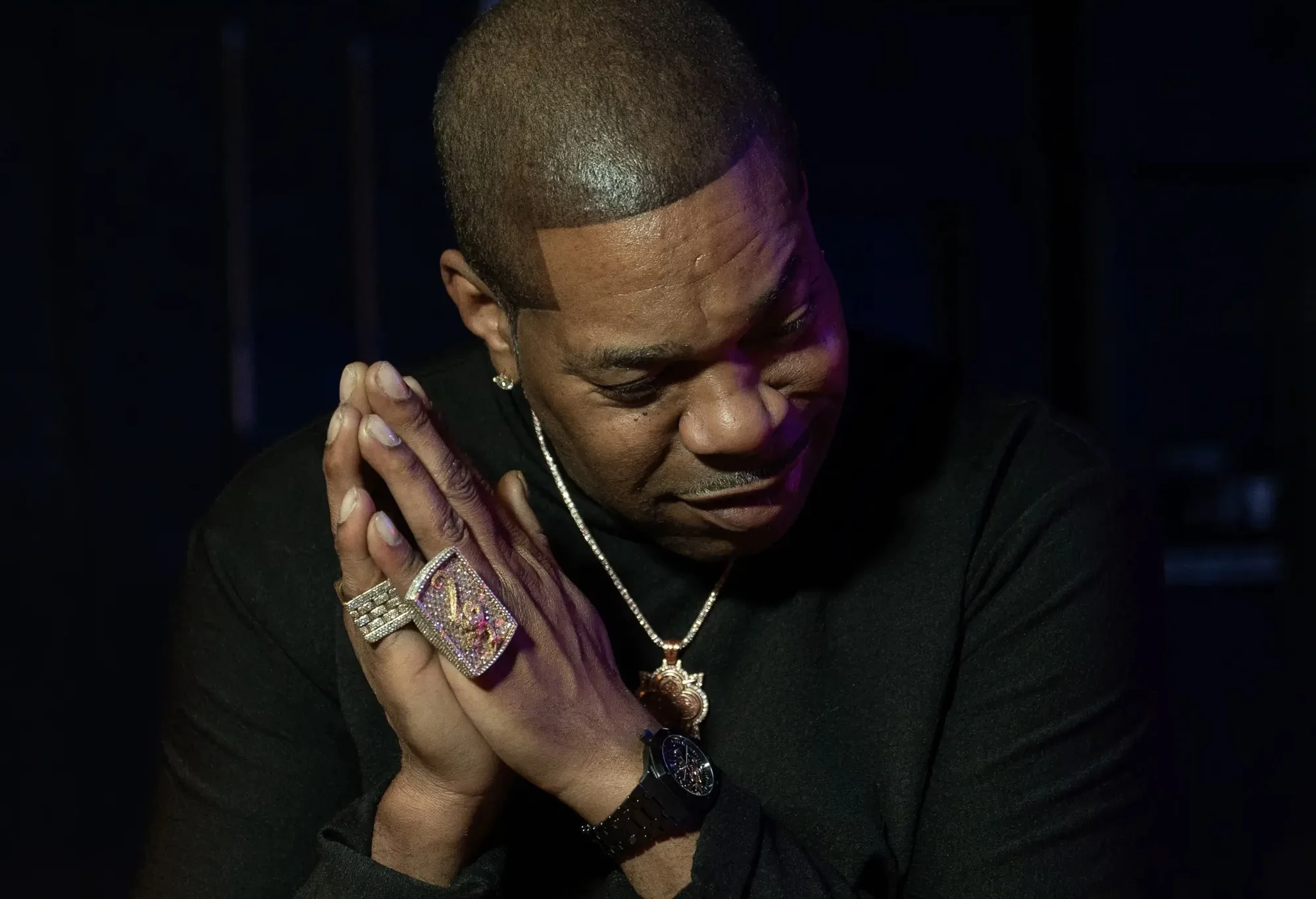
Eleven days ago, the most interesting question around Dillagence 2 was what Lil Wayne would sound like on a J Dilla beat. On Tuesday, Aug. 25, that question became almost secondary. The album is now out, and Busta Rhymes has revealed that the Dilla material in his possession included something much harder to reduce to a feature list: a previously unreleased collaboration with D’Angelo.
The discovery changes the scale of the project. Busta previewed the D’Angelo-assisted recording alongside footage from a new video directed by Hype Williams, placing three names from the same broad creative era inside one release. Dilla supplies the production, D’Angelo appears on the recording, Busta becomes the curator who brings it forward, and Williams handles the visual language.
That is a different proposition from the one HitsCulture examined when Dillagence 2 was still approaching release. The original story centered on Busta’s stash of more than 300 Dilla beats and the unusual sight of Lil Wayne entering that world for the first time. The new information answers the question that sat underneath that piece: what else, exactly, was hiding in those files?
Apparently, not just beats.
Busta has been telling the story of the archive for years. In 2020, he said Dilla left him with more than 300 beats before his death in February 2006. Those recordings became the foundation of Dillagence 2, the sequel to the 2007 Mick Boogie-hosted Dillagence mixtape. The first project treated Dilla’s instrumentals as a living rap canvas, with Busta, Q-Tip, Talib Kweli, Raekwon, Rah Digga and others moving through the producer’s rhythms while his death was still painfully recent.
The sequel arrives nearly two decades later, when the meaning of an unreleased Dilla beat has changed. It is no longer simply a fresh instrumental from a prolific producer. It is archival material from an artist whose catalog, technique and influence have been studied for twenty years, and whose unfinished work now carries questions about authorization, context and intent every time it reappears.
Busta has not presented himself as someone casually raiding a hard drive. On The New York Times’ Popcast, he discussed building the album from hundreds of unreleased Dilla beats and the emotional weight of making music around the work of friends who have died. That distinction matters because the D’Angelo recording puts the responsibility in sharper focus. One deceased artist’s archive is complicated enough. A recording that connects two of them is something else.
D’Angelo’s presence also makes musical sense rather than reading like a posthumous stunt. His history with Dilla runs through the same late-1990s and early-2000s network that helped reshape the relationship between hip-hop, soul and live musicianship. Dilla’s work with the Soulquarian orbit, Common, Erykah Badu, Questlove and others existed near the same gravitational center as Voodoo. D’Angelo later appeared on “So Far to Go,” the Common collaboration released on Dilla’s posthumous album The Shining.
That history is why the new recording carries more weight than a surprise guest credit. It does not introduce D’Angelo to Dilla’s world after the fact. It reveals another piece of a relationship that already existed, but had not been fully available to the public.
The timing adds another layer. D’Angelo died in October 2025, which means listeners now encounter the recording after both men are gone. HitsCulture recently examined that change in context through Rapsody’s “Apple Juice,” a song built as an explicit D’Angelo homage. That record asked how a living artist should extend a legacy without treating it like a museum piece. Dillagence 2 presents the harder version of the same question because Busta is not merely referencing the past. He is releasing material that the public did not know existed.
This is where Lil Wayne’s feature becomes useful again, but in a different way. “Talk Ya Shit” showed what happens when Busta uses the archive as a bridge. Wayne and Dilla never worked together during Dilla’s lifetime. Busta chose a beat, chose Wayne for it, and created a connection between artists whose careers overlapped without ever meeting on record. The result is contemporary by design: a new Wayne verse over an old Dilla production.
The D’Angelo collaboration is almost the inverse. Instead of creating a new meeting, Busta is exposing an old one. The archive is suddenly doing two jobs at once. It can generate combinations Dilla never heard, as with Wayne, and it can uncover combinations that already happened but never reached listeners.
That difference is important because posthumous music is often marketed as though discovery itself settles the artistic question. A vault is opened, a famous name appears in the credits, and rarity becomes the sales pitch. Dillagence 2 is more interesting when the rarity is treated as a responsibility rather than a commodity. Busta has a personal history with Dilla, a long public record of defending his importance, and a collection that Dilla placed in his hands while he was alive. None of that makes every release decision automatically correct, but it gives the project a level of proximity that many posthumous compilations cannot claim.
Hype Williams’ involvement sharpens the point. Williams did not merely become one of the defining music-video directors of the 1990s. He helped construct Busta’s visual identity through clips including “Woo Hah!! Got You All in Check,” “Put Your Hands Where My Eyes Could See,” “Dangerous” and “Gimme Some More.” He also directed D’Angelo’s “Lady” video in 1996. Bringing him in for the newly surfaced collaboration is therefore not random prestige casting. The visual is being entrusted to someone whose camera helped define how both performers were seen during the period in which this musical network was forming.
That is the real expansion of Dillagence 2. Before release, the album could be described cleanly as Busta Rhymes finally opening part of his J Dilla vault and inviting rappers to work over it. Now the project looks less like a beat tape with marquee guests and more like a curated excavation of an ecosystem.
Common belongs in that ecosystem because he made some of his most important work with Dilla. D’Angelo belongs because his music moved through the same rooms, musicians and ideas. Hype Williams belongs because he supplied images for the era. Wayne stands outside that original circle, which is precisely why his appearance remains compelling. Busta is positioned in the middle, close enough to the source material to remember the people behind it and active enough in 2026 to decide how those relationships are introduced to a generation that never experienced them in real time.
The scale of the archive still hangs over everything. More than 300 beats is not an album. It is years of possible albums, placements, fragments, false starts and decisions. Once listeners know that one of those pathways led to an unreleased D’Angelo recording, every unopened folder becomes more intriguing and more sensitive at the same time.
That leaves Dillagence 2 with a stronger question than the one it had on August 15. The issue is no longer where Lil Wayne fits. We know where he fits: Busta used Dilla’s archive to create a collaboration that history never produced on its own.
The bigger question is what Busta Rhymes was actually entrusted with, and how much of it should ever leave the vault. The first answer arrived today, with D’Angelo’s voice, Dilla’s production and Hype Williams behind the camera.
Comments (0)
No comments yet — be the first to share your thoughts.
Leave a comment