

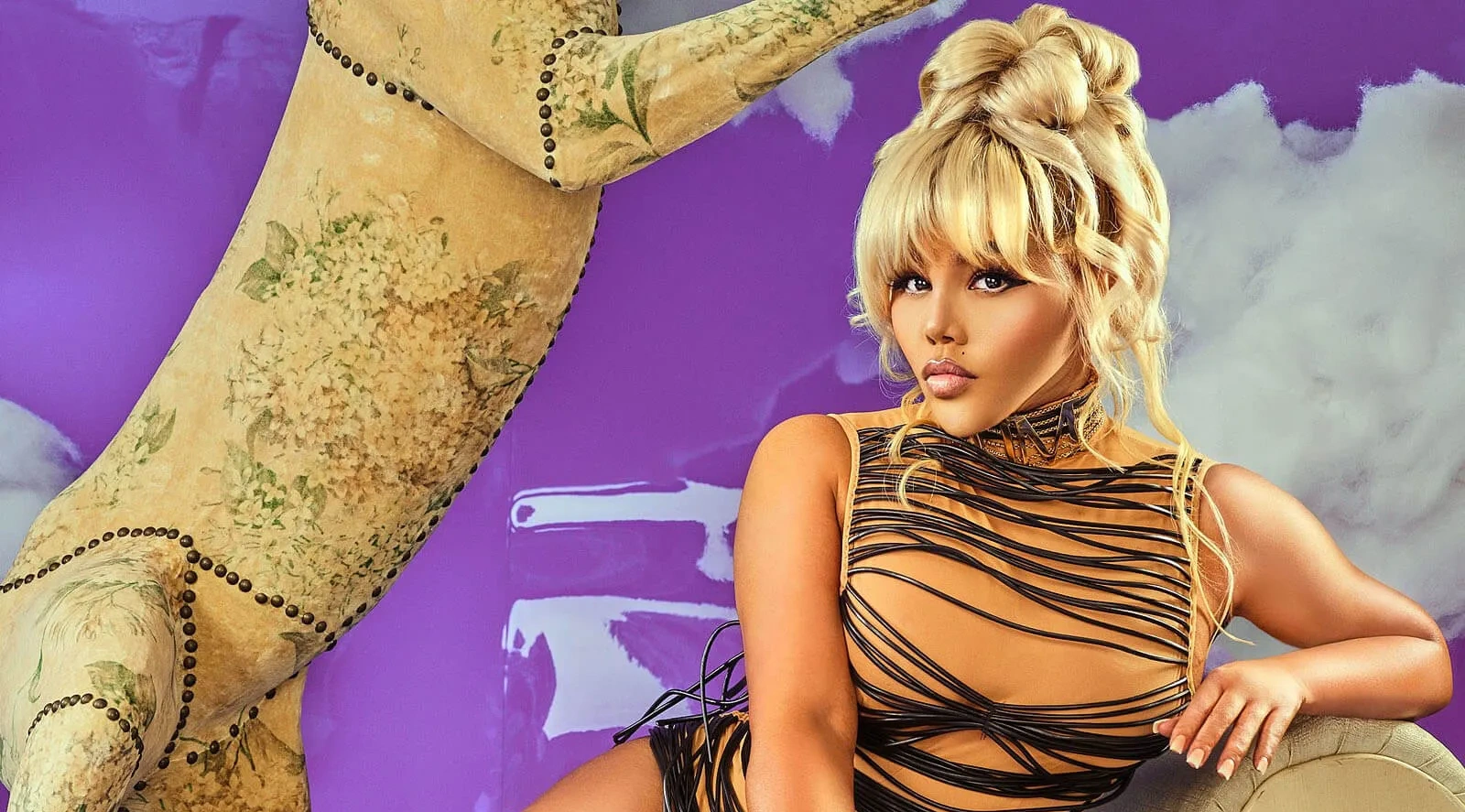
There is a peculiar thing that happens when a game-changing album survives long enough: the room around it transforms. Thirty years ago, Hard Core arrived as an unapologetically sexual, street-rooted Brooklyn rap record from a 22-year-old woman who rejected nearly every rule the industry had written for female MCs. On November 19, that same album will be played inside Kings Theatre with strings, horns, woodwinds and formal black-tie attire encouraged.
Lil' Kim has announced Hard Core Symphony, a one-night-only orchestral reworking of her 1996 debut album with Thee Phantom & The Illharmonic Orchestra. The Brooklyn performance lands exactly one week after the album's November 12 release anniversary and will mark Kim's first orchestral concert. Tickets are already on sale, according to the official announcement.
The program is expected to include symphonic arrangements of "No Time," "Big Momma Thang," "Crush on You" and "Not Tonight (Ladies Night Remix)." That last selection is technically larger than Hard Core itself, since the star-packed remix became its own cultural event in 1997. It paired Kim with Da Brat, Lisa "Left Eye" Lopes, Missy Elliott and Angie Martinez, reached No. 6 on the Billboard Hot 100 and earned a Grammy nomination. But the most interesting detail is not the set list. It is the staging.
Hard Core was not created to sound respectable. The album was designed around appetite, control and an almost gleeful refusal to make its woman at the center smaller for anybody's comfort. Notorious B.I.G. executive produced it, but Kim's presence is what made the record singular: the sex was explicit because she chose the terms, the luxury was aspirational because she understood the power of image, and the delivery could move from sly to confrontational without asking listeners to decide which version of her was the real one.
That approach made Hard Core a foundational record for the women who would spend the next three decades expanding rap's vocabulary for power, sexuality, fashion and self-invention. The album debuted at No. 11 on the Billboard 200 and later earned double-platinum certification. Its singles helped establish Kim not as a novelty beside the men around her, but as a commercial force with her own blueprint.
Kim has described the album's beginnings in much less ceremonial terms. Looking back in a 2016 interview, she said, "I was just doing what I love and displaying my talent." That origin story makes the symphonic treatment feel even more dramatic. The teenager who entered the studio without a grand institutional plan made a record that now has enough cultural weight to support one. Now that blueprint is being moved into a setting historically associated with preservation.
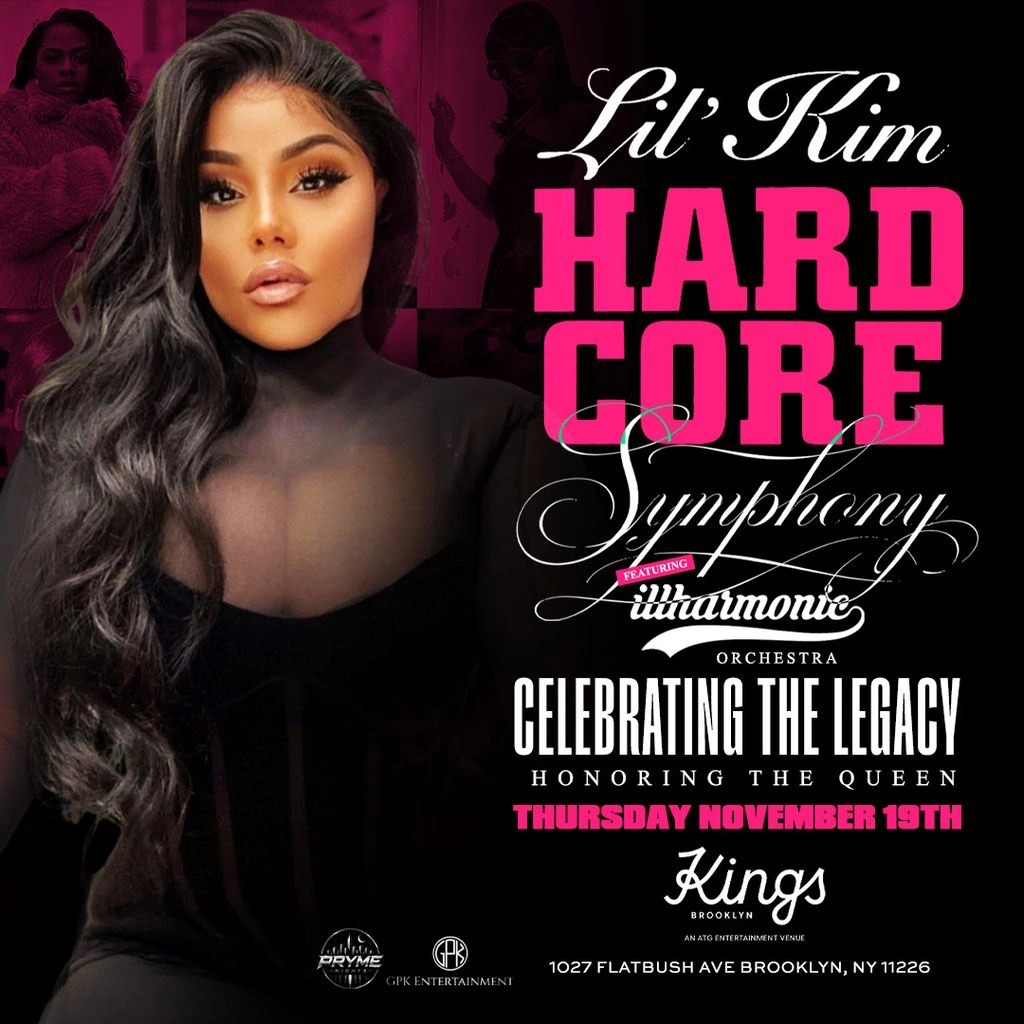
The orchestra is not being used as a decorative expansion for one awards-show song. The album itself is the repertory. Its hooks, bass lines and samples are being treated as material sturdy enough to survive rearrangement for sections of strings and winds. The theater is not asking hip-hop to visit classical music for a night. It is asking a hip-hop album to behave like a score.
There have been major orchestral rap moments before. Nas performed Illmatic with the National Symphony Orchestra at the Kennedy Center in 2014, a 20th-anniversary treatment that turned one of rap's most celebrated albums into a full concert work. Kendrick Lamar followed with a sold-out National Symphony Orchestra performance in 2015 built around material from To Pimp a Butterfly. Those concerts did not make either album important. They showed that institutions once slow to recognize hip-hop were learning how much of American music history had already been written without their permission.
Thee Phantom & The Illharmonic Orchestra sits directly inside that shift. Fronted by Jeffrey McNeill, known as Thee Phantom, and Andrea Coln McNeill, known as The Phoenix, the ensemble has spent more than two decades combining hip-hop and R&B with orchestral instrumentation. Its own history includes performances at Philadelphia's Kimmel Center, Carnegie Hall and the Kennedy Center. In a 2026 NPR interview, The Phoenix said it was important to show that the two genres are "not as completely different as people think they are."
That makes the pairing with Kim especially sharp. The Illharmonic's project has always challenged the assumption that orchestral presentation belongs to one class, one tradition or one audience. Hard Core challenged a different set of assumptions about who could occupy the center of rap, how openly a woman could talk about desire, and how much visual extravagance a street rapper could carry without surrendering credibility.
Put those two histories together and the concert becomes more than an anniversary gimmick.
The formal dress code makes that even clearer. Guests are being encouraged to arrive in black-tie attire, an instruction that could have felt absurd around this album in 1996 and now feels almost inevitable. Hip-hop spent decades borrowing the visual language of wealth, prestige and exclusion, then remixing it until the tuxedo, the fur, the diamond and the theater box no longer belonged to somebody else's world. Kim understood that transformation earlier than most. Fashion was never a side business in her career. It was part of the argument.
There is also something fitting about this happening in Brooklyn. Hard Core was built out of the borough's mid-1990s rap ecosystem, when Bad Boy's polish and Brooklyn's street detail could coexist on the same record. Kings Theatre gives the album an architectural backdrop equal to the scale of the memory surrounding it. The music is returning home, but not to be reenacted exactly as it was.
That is where many anniversary shows fail. Nostalgia can turn a living catalog into a wax figure. The artist walks onstage, the audience receives the familiar cues, everybody remembers who they were when the record arrived, and nothing in the music is asked to move. An orchestra changes the terms. A new arrangement can expose melody that production once buried, enlarge a chorus, or reveal that a rhythm fans thought they knew was carrying more tension than the original mix allowed them to hear.
Kim has revisited Hard Core before, most explicitly with the 2014 mixtape Hard Core 2K14, but this concert arrives at a different point in both her career and the genre's lifespan. Hip-hop's first generation of canonical albums is now entering the same anniversary cycle long occupied by classic rock and soul. Full-album performances, museum exhibitions, symphonic reinterpretations and archival reissues are no longer exceptional. They are becoming part of how rap remembers itself.
HitsCulture has been tracking that transition from the other side as well. Nas remains one of the clearest examples of a veteran rapper refusing to choose between legacy and present-tense work. The question is no longer whether hip-hop artists can age in public. It is what kinds of institutions, stages and formats will be built around the music once their catalogs become permanent cultural property.
Hard Core Symphony offers one answer. A record that once made gatekeepers nervous is not being softened for a prestigious room. The room is being redesigned around the record.
That is the real anniversary story. Lil' Kim does not need an orchestra to prove that Hard Core belongs in the canon. Thirty years of influence already did that. On November 19, Brooklyn gets to hear what happens when the canon is finally scored for strings.

Comments (0)
No comments yet — be the first to share your thoughts.
Leave a comment