

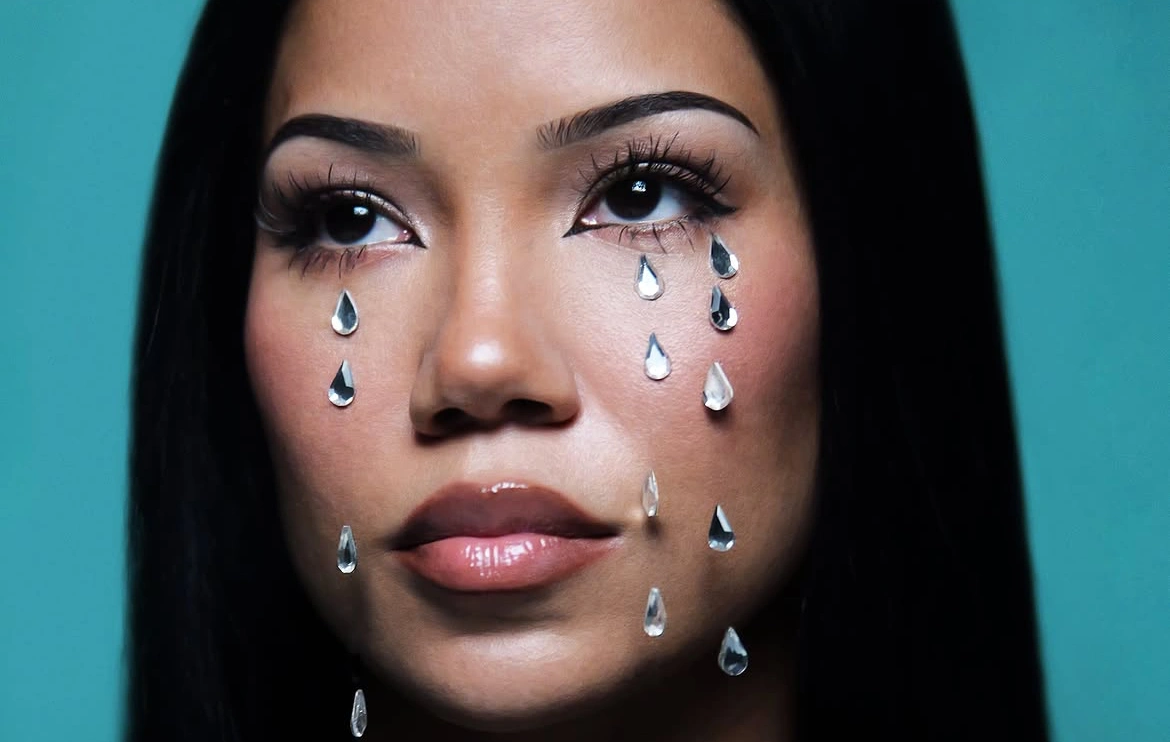
There is an ease to Westside Whimsy that becomes apparent almost immediately. Jhené Aiko is not trying to overwhelm the listener with a grand reinvention or announce every emotional turn with a dramatic roar. Instead, the Grammy-nominated singer-songwriter's new album welcomes you into its world, gets comfortable and gradually reveals how much is happening beneath its calm surface.
On first listen, this is a strong effort from Aiko and may ultimately prove to be her best body of work. That is a big statement this early, particularly for an artist whose catalog has already established such a recognizable emotional language. But Westside Whimsy feels unusually complete. Vulnerability sits beside sensuality. Regret does not cancel out freedom. Love can still be complicated without turning every relationship into a tragedy.
More than anything, the album feels welcoming. There is space inside these songs. Aiko sounds comfortable enough to let a thought linger without rushing toward its resolution, and that patience gives the record much of its appeal. Her familiar intimacy remains intact, but the music does not feel trapped inside the same emotional room she has visited before.
“He Belongs” is one of the clearest examples. The song is raw and honest in its portrayal of an unsettled man, and Aiko does not dress that instability up as romance. What makes the record hit is the recognition underneath it. There is affection there, but there is also the exhaustion that comes with understanding that wanting someone does not necessarily make them capable of standing still long enough to be loved properly.
Aiko has spent much of her career exploring the spaces between attachment and self-preservation, but “He Belongs” feels particularly direct. She is not performing heartbreak for effect. The emotion comes from recognizing the person in front of her for exactly who he is. That gives the song a maturity that lingers after it ends.
“Like, Whatever,” featuring Tyga, shifts the emotional temperature. Where “He Belongs” wrestles with somebody else’s instability, “Like, Whatever” exudes strength and freeness. Aiko sounds unburdened. There is something satisfying about hearing her operate from that position because the freedom does not come across as forced indifference. It feels more like someone realizing she no longer has to carry every situation with her.
The record works because Aiko does not confuse freedom with emotional numbness. She can care and still move forward. She can acknowledge what happened without giving it authority over what happens next. That balance is becoming one of the most compelling theme running through Westside Whimsy.
But my favorite so far is “Don’t Be That Guy.” It is a sultry and soulful lullaby about what could have been, and there is something quietly crushing about the way it sits inside that possibility. The song does not need a dramatic collapse to communicate disappointment. Aiko lets desire and resignation occupy the same space, which makes the record feel intimate rather than theatrical.
That restraint has always been one of her strengths. Aiko often sounds most affecting when she is barely raising her voice, allowing the weight of a lyric or melody to do the work. “Don’t Be That Guy” lives in that pocket. It feels like a late-night conversation that probably should have happened earlier, except both people already know enough to understand how it ends.
“Lullaby” is another immediate standout. Smooth and genuinely eargasmic, it captures the softness that makes Aiko’s music so easy to sink into without allowing that softness to become background music. There is a difference between music that is quiet and music that commands attention quietly, and “Lullaby” belongs in the latter category.
Then comes “So Good,” featuring Kendrick Lamar, which gives the album another gear entirely. It is groovy, loose and built like a ride-out anthem. This is the record for open windows, warm air, a long road and no particular urgency about reaching the destination. The chemistry works because the song does not feel burdened by the significance of putting Aiko and Kendrick together. It simply moves.
That sense of movement is important because Westside Whimsy could easily have become too comfortable. Aiko’s voice and atmospheric instincts are distinctive enough that she can create a mood almost on command, but mood alone cannot sustain an entire album. The early standouts suggest she understands that. The project shifts between introspection, sensuality, confidence and release without sacrificing the calm center holding it together.
There is also something refreshing about hearing an album that does not seem desperate to manufacture a viral moment. Westside Whimsy feels designed to be lived with rather than chopped into pieces. Its strongest moments invite another listen because they leave emotional residue, not because they immediately demand attention.
That may ultimately be what separates this project within Aiko’s catalog. Her best music has always created a particular kind of intimacy, but Westside Whimsy sounds like intimacy accompanied by perspective. The feelings are still complicated. The men can still be complicated. Love, desire and disappointment remain tangled together. What has changed is the sense that Aiko knows she does not have to solve every complication before finding some peace inside it.
It is too early for a definitive catalog ranking. First listens can overreward immediacy, and the songs that eventually become indispensable are not always the ones that announce themselves first. But after spending initial time with Westside Whimsy, calling it one of Aiko’s strongest albums does not feel premature.
Right now, “Don’t Be That Guy” is the record I want to return to first. “He Belongs” has the honesty. “Like, Whatever” carries the freedom. “Lullaby” supplies the smoothness, and “So Good” gives the project a groove meant to leave the house.
Together, those records help explain why Westside Whimsy makes such a strong first impression. Jhené Aiko has made an album that feels good to enter and difficult to leave. If the rest of the project continues to deepen with repeat listens, we may be looking at the most complete body of work of her career.



Comments (0)
No comments yet — be the first to share your thoughts.
Leave a comment